Best Things to Do NYC: 4 Must-See Spots for First-Timers
The best things to do NYC offers: Central Park, Times Square, Brooklyn Bridge & The Met — with entry fees, routes, and tips for first-timers.
Best Things to Do NYC: 4 Must-See Spots for First-Time Visitors
Planning your first trip to New York City comes with one universal problem: there's simply too much to see. Start listing museums, parks, observation decks, and Broadway shows, and your carefully planned 3-to-5-day itinerary explodes before you've even booked a hotel. That's why this guide cuts through the noise and focuses on the best things to do NYC has to offer — just four essential spots, chosen so that even a first-timer can leave the city with zero regrets.
As of July 2026, New York is in peak summer season. Flights and hotels are on the pricier end of the annual curve, but there's a real upside: long daylight hours mean you can pack far more into a single day than you could in winter. Whether you're on a honeymoon, a friends' trip, or a solo adventure, if you want to squeeze as many quintessential New York moments as possible into a short stay, this one guide will give you the sights, the routes, and the budget.
The four places below are deliberately different in character — one dazzling, one peaceful, one made for walking, and one worth an entire day on its own. Combine them well, and you can taste the essence of New York in just two days.
Before You Go: Timing, Routes, and Getting Around
Half of your satisfaction with a New York trip comes down to two decisions: when you go and how you plan your daily routes. The most recommended seasons are spring (April–June) and fall (September–November). Spring brings blooming flowers to Central Park and mild walking weather, while fall delivers foliage and crisp blue skies that make every photo look better. The holiday season (late November through December) is magical — the Rockefeller Center tree, the Christmas markets — but you'll pay for it with biting cold, peak crowds, and the highest hotel rates of the year.
For routing, think of Manhattan vertically. Central Park and the Metropolitan Museum of Art sit uptown, Times Square is in Midtown, and the Brooklyn Bridge anchors Lower Manhattan. Sweeping the city top-to-bottom (or bottom-to-top) one day at a time saves an enormous amount of energy compared to zigzagging.
For transportation, the subway is the answer. You no longer need to buy and refill a MetroCard — the OMNY system lets you simply tap a contactless credit card or your smartphone at the turnstile. Even better, OMNY has a weekly fare cap: once you hit a certain number of rides within a week, additional rides that week are free. The more you ride, the more you save.
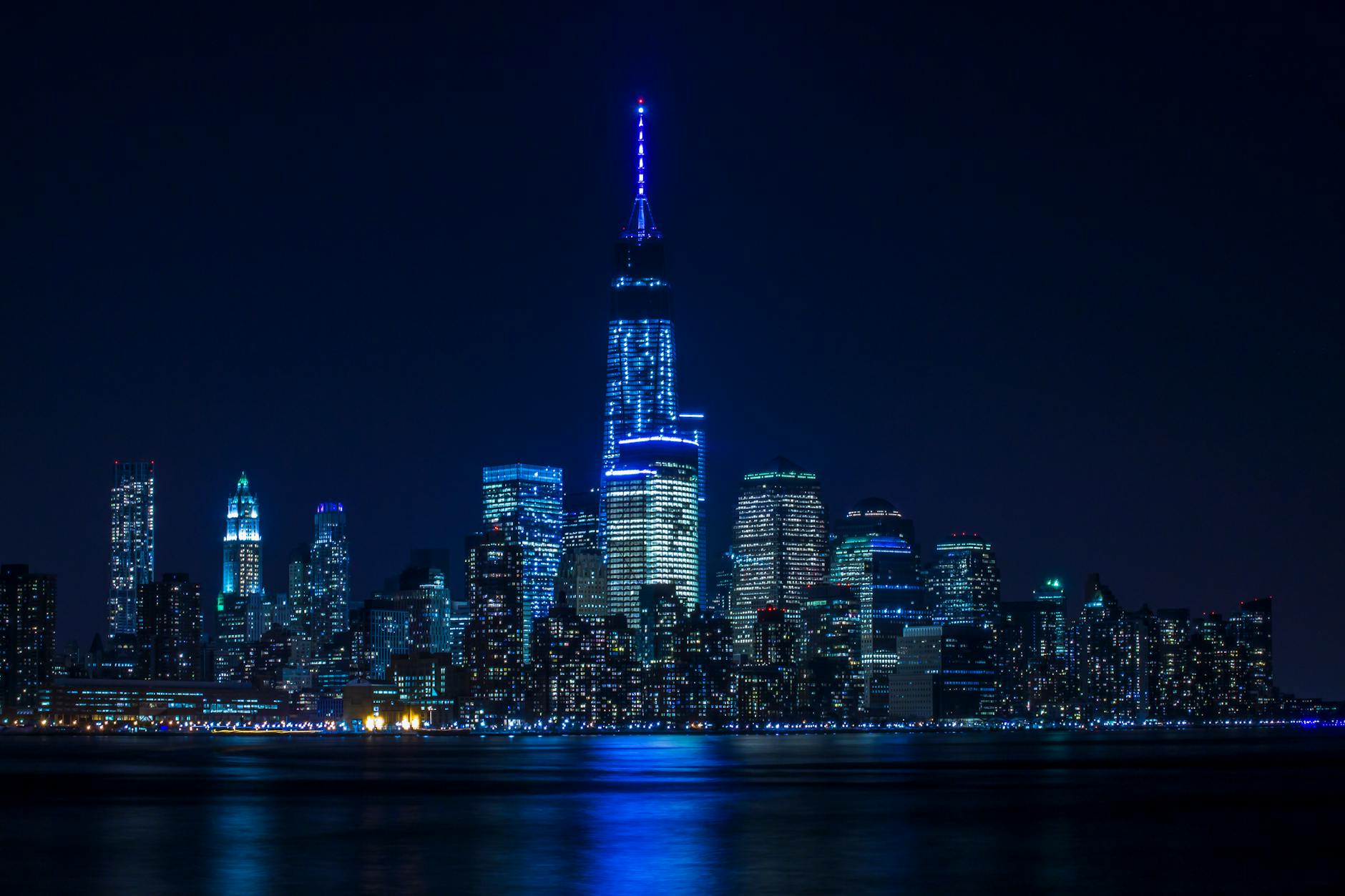 Illuminated New York City skyline reflecting over the Hudson River at night. (Photo: Reynaldo #brigworkz Brigantty / Pexels)
1. Central Park — A Massive Green Escape in the Heart of Manhattan
No list of the best things to do NYC-wide would be complete without Central Park. Stretching more than two and a half miles through the middle of the skyscraper canyon, this enormous park has one immediately lovable feature: it's completely free. Even on a tight travel budget, you can happily spend half a day here without spending a dime.
For photos, remember just two spots. First, Bethesda Fountain and its grand terrace, which you've seen in countless movies. Second, Bow Bridge, the elegant cast-iron arch curving over the Lake. They're only a five-minute walk apart, so they pair perfectly. A classic route: enter from the south at 59th Street, stroll up the tree-lined promenade of the Mall, then hit Bethesda Fountain → Bow Bridge → Sheep Meadow. Even at a leisurely pace, an hour and a half covers it all.
Each season gives the park a different face — cherry blossoms in spring, picnic blankets covering the lawns in summer, fiery foliage in fall, and an ice-skating rink in winter. Visiting in July? Go early in the morning to beat the heat, then exit on the west side for a late breakfast or brunch at a café on the Upper West Side. Once you've refueled, cross back through the park to the east side, where the Metropolitan Museum of Art is waiting — a route with almost zero wasted transit time.
2. Times Square — The Heart of the City That Never Sleeps
If any single place makes you feel "I'm really in New York," it's Times Square. By day, it's a flashy but frankly chaotic plaza. After sunset, it transforms completely. The wall-to-wall mega billboards light up the night sky as bright as noon, and no photo you've seen prepares you for standing in the middle of it. The best viewing window runs from just after sunset until around 10 p.m. — arrive during blue hour, when a hint of twilight still lingers in the sky, and you can capture that perfect shot of glowing screens against a deep blue backdrop.
There's one more thing you shouldn't leave Times Square without: a Broadway show. The TKTS booth right in the square is famous for selling same-day tickets at steep discounts — often far below face value for anything that isn't a red-hot blockbuster. If there's a specific show you're set on, book ahead on the official site to be safe. But if your attitude is "I just want to see something on Broadway," standing in the TKTS line is part of the fun.
One word of caution: crowds at this scale attract pickpockets. Wear your bag in front, keep your phone out of your back pocket, and you'll avoid most problems. You'll also encounter costumed characters offering photos — they expect tips afterward, so if you're not interested, a polite "no thanks" and a steady walking pace is all you need.
3. Brooklyn Bridge — The Walk That's a Destination in Itself
Among all the best things to do NYC offers, the Brooklyn Bridge is the only one where the walking is the attraction. Completed in 1883, the bridge combines Gothic stone arches with fanning steel cables, and there's genuinely no bad angle — press the shutter anywhere on the span and you'll get a keeper. Starting from the Manhattan side and walking toward Brooklyn takes about 30 to 40 minutes, and the layout has a delightful quirk: the Manhattan skyline unfolds behind you as you go, so you'll find yourself constantly turning around.
The best times to cross are just after sunrise and around sunset. Early mornings mean thin crowds and unhurried photos from the center of the bridge; at golden hour, you get the silhouette of the bridge against a Manhattan skyline dipped in orange. Two practical notes for summer: there's almost no shade on the span, so midday crossings in July are genuinely hot, and the bike lane is separated from the pedestrian path — stay on your side, because cyclists move fast.
Cross the bridge and you land directly in DUMBO. The iconic Washington Street photo spot — where the Manhattan Bridge appears perfectly framed between two brick buildings — is the neighborhood's signature shot, and Brooklyn Bridge Park along the waterfront offers head-on skyline views that keep getting better as you walk. Worked up an appetite? DUMBO is home to some of the most legendary coal- and wood-fired pizzerias in the city — the kind of old-school institutions credited with defining New York pizza. The wait is worth it.
4. The Metropolitan Museum of Art — One Day Is Never Enough
Ranked alongside the Louvre and the British Museum among the world's great art institutions, the Metropolitan Museum of Art — the Met — is the intellectual highlight of any New York trip. The collection is so vast that seeing everything would take days, so for a first visit, the smart play is a focused 2-to-3-hour highlights route.
The must-sees cluster in the European Paintings galleries: Van Gogh's self-portrait and his wheat field paintings, Monet's water lilies, and Degas's ballerina sculptures. Then there's the Temple of Dendur in the Egyptian wing — an entire ancient temple relocated into a soaring glass-walled hall — which stuns even travel companions who claim they "don't do museums." A recommended route: Egyptian wing (Temple of Dendur) → European Paintings (Van Gogh, Monet) → Greek and Roman galleries. That alone fills 2–3 rich hours.
Adult admission runs around $30, and tickets can be purchased online in advance. The official app and audio guide offer content in multiple languages, so check before you enter. And here's the hidden gem most visitors walk right past: the rooftop garden. Typically open from spring through fall, it delivers a sweeping view of Central Park's green canopy with the Manhattan skyline rising beyond it — the perfect final stop of your visit. A July trip almost certainly falls within the rooftop season, so don't miss it.
How to Combine All Four: 1–2 Day Itineraries and Budget
Now let's turn these four spots into an actual plan.
The one-day route flows from uptown to Midtown. Morning walk through Central Park (Bethesda Fountain, Bow Bridge) → 2–3 hours at the Met on the park's east side → subway down to Midtown for dinner → finish with the Times Square lights after dark. Short transit hops, natural flow — it's the ideal first-day itinerary.
The two-day route adds the Brooklyn Bridge. On day two, head to Lower Manhattan in the late afternoon, cross the bridge, catch sunset at the DUMBO photo spot and Brooklyn Bridge Park, then close the evening with pizza. Keep the morning free for shopping or a SoHo stroll — it doubles as recovery time for your legs.
For daily budgeting, here's a realistic breakdown: around $10 for three or so subway rides, roughly $30 for Met admission, $40–50 for food if you keep it casual, or $70+ if you add one proper restaurant meal. A Broadway ticket is extra. If you're planning multiple paid attractions — observation decks, cruises, and the like — a bundled pass such as CityPASS can save significantly over individual tickets, so count your paid stops before deciding. Here's the good news: of these four essentials, only the museum charges admission. Stick to the core route, and New York is far more affordable than its reputation suggests.
Frequently Asked Questions
Q: How many days do I need in New York?
If you're targeting just the four essentials in this guide, 2–3 days is genuinely enough. But if you want unhurried museum time, or side trips like the American Museum of Natural History or the Woodbury Common outlets, plan for 4–5 days. The difference is real: a 3-day trip means walking hard from morning to night, while 5 days buys you the luxury of one lazy morning.
Q: New York is expensive — what should I budget per day?
Excluding your hotel, plan on a minimum of $80–100 per day for food, transit, and admissions, with $120–150 being a comfortable average. The savings playbook is simple: build your itinerary around free attractions like Central Park, the Brooklyn Bridge, and Times Square; grab lunch at delis and food halls; and if you're visiting three or more paid attractions, look into a city pass.
Q: Is New York safe? Can I go out at night?
The main tourist areas stay busy well into the night and are generally safe — Times Square is crowded even near midnight. That said, crowds are themselves a risk, so pickpocket awareness is essential there. Late at night, avoid empty subway platforms and empty train cars; ride in a car with other people. For longer trips after midnight, a rideshare is simply more relaxing than the subway.
Q: Do I need to book the Met in advance?
Reservations aren't required — you can buy tickets on-site. But in peak season, the ticket lines get long, so buying online ahead of time can save serious waiting. Budget 2–3 hours for the highlights, or half a day or more if you want to go deep. Large bags and suitcases may be restricted at the entrance, so leave your luggage at the hotel and travel light.
Final Thoughts
There you have it — the best things to do NYC first-timers should build their trip around: Central Park, Times Square, the Brooklyn Bridge, and the Metropolitan Museum of Art, complete with routes and budgets. Four wildly different experiences, but stitched together with the 1–2 day itineraries above, they'll show you every face of New York even on a tight schedule.
The biggest mistake on a first New York trip is trying to see everything and truly enjoying nothing. Use these four spots as your skeleton, then layer on one or two personal picks with whatever time remains. If your flights are already booked, open your maps app right now and save this route. Here's to a first trip to New York with zero regrets.