
Namhae German Village Travel Guide: Beer, Food, Photo Spots
Plan your trip with this Namhae German Village travel guide: German beer and sausage joints, scenic cafes, photo spots, parking, and where to stay.
Namhae German Village Travel Guide: Beer, Restaurants, and Photo Spots All in One Place
If you're researching destinations along South Korea's southern coast, one place keeps showing up on every itinerary: Namhae German Village. Perched on a hillside overlooking the sea on Namhae Island, this cluster of white-walled, orange-roofed houses looks like it was airlifted straight out of Bavaria — and in a sense, it almost was. The village has become one of Korea's most beloved weekend escapes, equally popular as a day-trip drive and an overnight getaway.
Couples come for the European-style photo backdrops. Families come for the schweinshaxe and sausage platters. But the moment you start planning, the questions pile up: Where's the best place to drink German beer? Where do I park? Is half a day enough? This Namhae German Village travel guide answers all of it — the beer, the restaurants, the photo spots, and a ready-made itinerary — so you can show up and simply enjoy yourself.
What Is Namhae German Village? (History and Location)
Namhae German Village sits on a hillside in Mulgeon-ri, Samdong-myeon, in Namhae County, South Gyeongsang Province. It was established in the early 2000s as a place for Korean miners and nurses who had been dispatched to West Germany in the 1960s and 70s — known as the padok generation — to return home and settle after decades abroad. This is the detail that sets the village apart: it's not a theme park. It's a real residential community, built and lived in by the very people whose story it tells. The houses follow authentic German architectural styles, and many now double as guesthouses, cafes, and restaurants.
For international travelers unfamiliar with the backstory: in the 1960s, South Korea sent thousands of workers to Germany as part of a labor agreement, and their remittances helped fund Korea's economic rise. The village is both a retirement community and a living monument to that chapter of history — which makes wandering its streets feel meaningful rather than manufactured.
Getting there is far easier by car. From the Namhae Expressway, cross the Namhae Bridge or Noryang Bridge and continue about 30–40 minutes toward Samdong-myeon. Busan is roughly a 2-hour drive; Daejeon and Daegu are around 2.5 hours, making it a comfortable weekend trip. Public transit is possible but slow: take an intercity bus to Namhae Bus Terminal, then transfer to a local bus bound for Mulgeon-ri. Local buses run infrequently, so check the timetable in advance — or better yet, rent a car.
Parking tip: Use the public parking lot near the village entrance. On peak-season weekends it reportedly fills up by 11 a.m., so aim to arrive before 10. The lanes inside the village are narrow and steep — if it's your first visit, don't attempt to drive up into the residential streets.
 Charming Heidelberg Biergarten display showcasing vintage beer signs and local reflections. (Photo: Sueda Güzeldere / Pexels)
How to Enjoy German Beer Properly: Brewhouses and Pubs
Let's be honest — for many visitors, the beer is the headline act. Pubs and restaurants throughout the village pour authentic German styles, and half the fun is choosing what suits your mood:
- Weizen: A classic wheat beer with signature banana-like aromas and a soft, smooth finish. The best pick for beer newcomers or an easygoing daytime pint.
- Dunkel: A dark lager with nutty, roasted depth. It pairs beautifully with rich dishes like schweinshaxe and grilled sausages.
- Pilsner: Crisp, clean, and refreshing — the obvious choice for a hot summer afternoon on a terrace.
Many of the pubs on the village's mid and upper slopes have terrace seating with sweeping views over Mulgeon-ri's coastal windbreak forest and the open sea beyond. Settle in around sunset with a cold Weizen and you'll have one of those "wait, am I actually in Germany?" moments. If you're the designated driver, don't worry — several places carry non-alcoholic German beers, so just ask your server.
One more thing you shouldn't miss: the village's Oktoberfest-style beer festival, held annually in early October. During the festival, the main square fills with traditional German costume parades, live music, and outdoor beer stands, and the entire village takes on a party atmosphere. Dates and programs change year to year, so check the Namhae County website or the village's official channels before planning a trip around it.
Where to Eat: Schweinshaxe, Sausages, and More
Restaurant menus in Namhae German Village revolve around two signature dishes: schweinshaxe (oven-roasted German pork knuckle) and the sausage platter. Here's how to decide:
- Schweinshaxe: Crispy, crackling skin outside, tender meat inside, served with sauerkraut. It's a hearty dish best shared between two or three people. Prices vary by restaurant but generally run around 40,000–60,000 KRW (roughly $30–45 USD).
- Sausage platter: A sampler of three to five types of wurst on one plate. Ideal for first-time visitors who want to compare textures and flavors. Expect around 20,000–40,000 KRW.
- Burgers and schnitzel: If pork knuckle feels like too much — especially with kids in tow — house-made burgers and schnitzel (a breaded, fried cutlet) are reliable crowd-pleasers.
Budget-wise, plan on about 20,000–35,000 KRW per person ($15–26 USD) for a meal with beer, and you'll have room to spare.
How to beat the lines: On peak-season weekends, popular restaurants can see waits of 30 minutes to an hour during the lunch rush (noon to 2 p.m.). The realistic strategy is to walk in right at the 11 a.m. opening, or aim for a late lunch after 2:30. Some restaurants take phone or online reservations, so it's worth checking ahead. Also note that many places close early in the evening — if you're planning dinner in the village, confirm closing times first.
Cafes and Desserts: Sea-View Coffee and German Bakeries
After lunch comes dessert, and the village delivers here too. Several bakery cafes specialize in German breads. The star items are the brezel (a chewy, heart-shaped German pretzel) and, in winter, stollen — the traditional German Christmas bread packed with dried fruit and marzipan. In summer, expect pretzels, pretzel sandwiches, and German-style cakes as the mainstays, with stollen typically appearing only around the holidays.
If you're hunting for the best sunset seat, target the cafes at the top of the hill. From their floor-to-ceiling windows and terraces, you can watch the sun sink behind the Mulgeon-ri coastline and its famous windbreak forest — a crescent of old-growth trees along the shore that's designated a Korean Natural Monument. The trick is to claim a seat 30–40 minutes before sunset. In midsummer the sun sets around 7:30 p.m., which flows perfectly into an evening itinerary.
Photo Spots and Things to See: From the Exhibition Hall to the Garden Village
If your goal is that one perfect shot, structure your route like this:
- Orange rooftop viewpoint: From the road along the upper village and near the observation deck, you get the signature composition — layers of orange roofs against the blue sea. The light is best mid-morning (10 a.m. to noon), when the sun sits behind you and the sky and water photograph at their most vivid.
- The Exhibition Hall of German Dispatch Workers: A small museum documenting the history and personal artifacts of the miners and nurses who worked in Germany. Beyond being photogenic, this is the place where the village's existence clicks into focus — highly recommended, especially if you're traveling with older family members. The steps in front of the plaza and the German flag installation are popular photo points too.
- Wonye Art Village (Garden Art Village): Right next door, this garden-themed village strings together privately designed gardens and flower-lined paths — wonderful for photos. There's an admission fee, so check at the ticket booth.
- Mulmi Coastal Road: The scenic drive from the German Village toward Mijo Port hugs the coastline the whole way. The road itself is the attraction — most travelers stop at every pull-off viewpoint to take pictures.
Suggested Itineraries: Half-Day and Overnight
Half-day course (about 4–5 hours) Arrive and park by 10 a.m. → stroll the village and hit the rooftop viewpoint → early lunch at 11:30 (schweinshaxe and a Weizen) → visit the Exhibition Hall → pretzel and coffee at a sea-view cafe → depart around 3 p.m. It's the perfect density for a weekend drive.
Overnight course (2 days) Day 1: Arrive at the German Village → lunch → Wonye Art Village → sunset cafe → stay overnight in a German-style guesthouse (many of the village's residential guesthouses have balconies with sea views). Day 2: Drive the Mulmi Coastal Road → stop at Mijo Port or Sangju Silver Sand Beach → visit Boriam Hermitage on Geumsan Mountain if time allows → head home.
Booking and seasonal tips: Guesthouses inside the village have limited rooms, so during peak season (July–August, and the October festival) book at least a month ahead. Early October, during the beer festival, is the most popular time of year to visit. Midsummer offers lush green scenery and cold beer — a great combination — but the hilly walking paths get hot, so bring a hat and water. Spring (April–May) coincides with flower season at the garden village next door, making it ideal for photography trips.
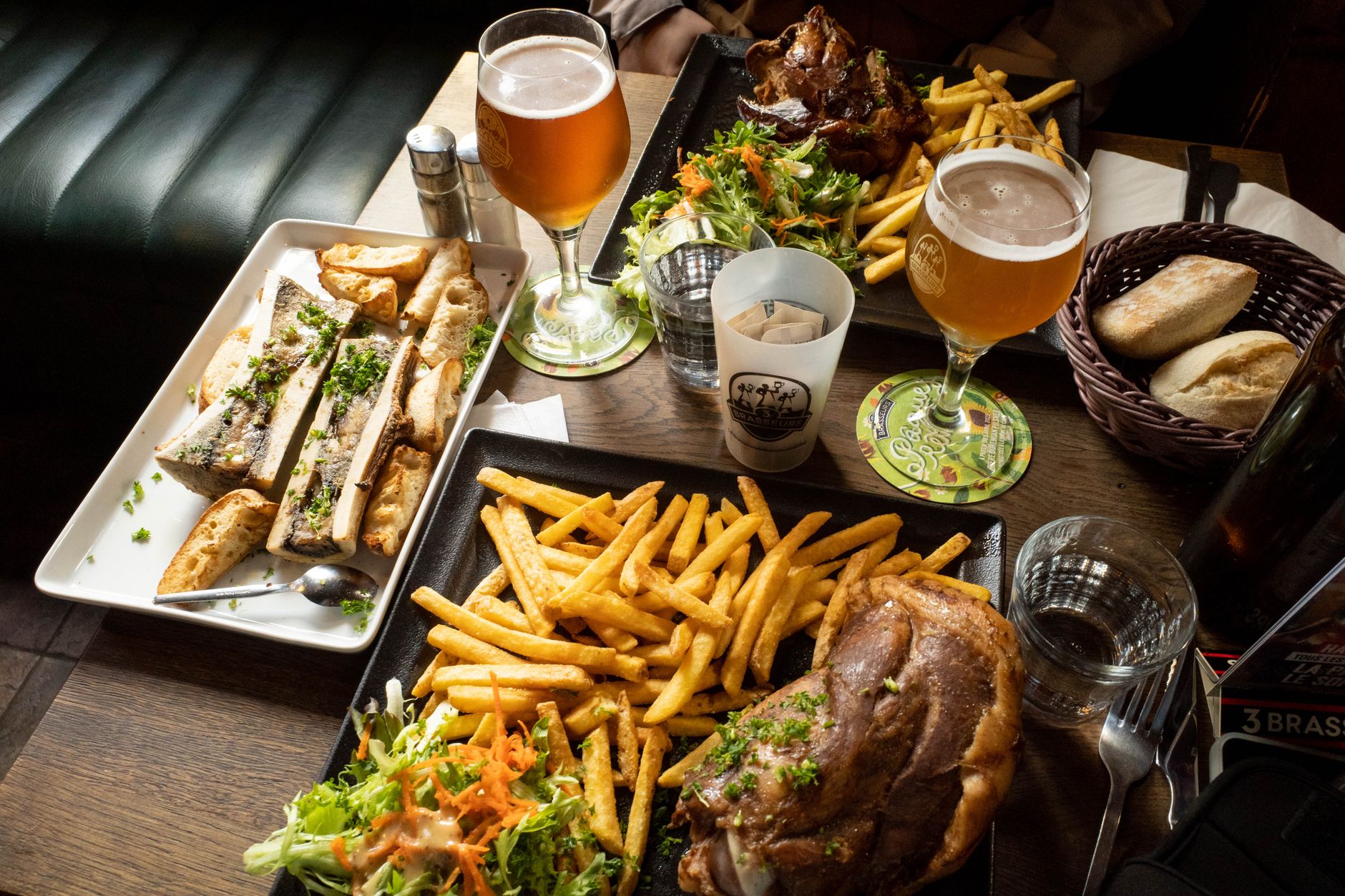 A hearty meal with fries, salad, and beer served on a rustic wooden table. (Photo: Bingqian Li / Pexels)
Frequently Asked Questions (FAQ)
Q: When is the Namhae German Village beer festival? A: The Oktoberfest-style beer festival is held annually in early October. Exact dates and programs vary from year to year, so check the Namhae County website or the village's official announcements before locking in your travel plans.
Q: Where do I park at the German Village? A: The public parking lot at the village entrance is the default. On busy weekends it often fills before noon, so arrive early. If it's full, the fallback is the lower parking area toward Mulgeon-ri, followed by a 10–15 minute uphill walk. Please avoid parking in the village's residential alleys — people live there.
Q: Is it a good destination for kids? A: Absolutely — families are a big part of the crowd. That said, the village is built on a hillside, so a baby carrier works better than a stroller; if you do bring one, stick to the flat area around the main square. Several restaurants serve kid-friendly options like burgers and schnitzel, and the adjacent Wonye Art Village is a gentle, stroller-friendlier walk.
Q: Is the German Village enough on its own, or is there more nearby? A: The village itself takes about half a day, which is exactly why any good Namhae German Village travel guide pairs it with the surrounding area: the Mulmi Coastal Road drive, Sangju Silver Sand Beach for summer swimming, and Boriam Hermitage on Geumsan Mountain for panoramic views over Hallyeohaesang National Park. Finishing the day with fresh seafood at Mijo Port is another popular move.
Final Thoughts
That wraps up this Namhae German Village travel guide — history, beer, restaurants, cafes, photo spots, and itineraries in one place. If you remember just one game plan, make it this: arrive early and grab a spot in the public lot, order the schweinshaxe-and-Weizen combo for lunch, spend the afternoon at the Exhibition Hall and the garden village, and finish at a sunset cafe. Follow that route and even a first visit runs flawlessly.
If you're eyeing the October beer festival, start looking at accommodations now — rooms disappear fast. And if you're heading down this summer weekend, a cold German beer with a Korean sea view is waiting for you. Been to Namhae German Village already? Share your experience and your own hidden spots in the comments below!