
Namhae German Village Travel Guide: Beer, Food & Stays
The complete Namhae German Village travel guide: craft beer spots, authentic German cuisine, photo spots, places to stay, and beer festival dates.
Namhae German Village Travel Guide: Beer, Restaurants, and Where to Stay
Planning a trip to Namhae Island and wondering whether the German Village is worth a stop? Here's the short answer: absolutely. This hillside village of orange-roofed houses overlooking the blue waters of Mulgeon Harbor is one of the most unexpected sights in South Korea — a slice of Bavaria transplanted to the country's southern coast. Sipping a cold German wheat beer on a terrace while gazing out over a Korean fishing harbor is the kind of surreal travel moment you won't find anywhere else in the country.
As of summer 2026, the village is busier than ever, drawing couples and families alike during the peak vacation season. And it's easy to see why: between authentic German dishes like pork knuckle and bratwurst, ocean-view cafes, photogenic European-style streets, and guesthouses built in genuine German architectural style, there's enough here to fill anywhere from half a day to a full overnight stay.
This Namhae German Village travel guide covers everything you need to plan your visit — the beer, the restaurants, the cafes, the best photo spots, where to stay, and suggested itineraries. Read this one article and you'll be ready to go.
What Is Namhae German Village? A Unique Piece of Korean History
Namhae German Village isn't a theme park or a manufactured tourist attraction — it's a real community with a genuinely moving backstory. In the 1960s and 70s, thousands of young Koreans left for West Germany to work as coal miners and nurses, sending money home to a country still rebuilding after the Korean War. Their remittances played a meaningful role in Korea's economic recovery. In the early 2000s, the local government established this village on Namhae Island as a place where these workers could retire and return to their homeland after decades abroad.
Walking through the village, that history gives the place a depth that goes beyond pretty scenery. Many of the houses were reportedly built with construction materials imported directly from Germany, which is why the streets genuinely feel like a small European town rather than a replica.
That said, the scenery alone is worth the trip. White-walled houses with terracotta-orange roofs climb the hillside, and beyond them the deep blue of Mulgeon Harbor stretches to the horizon. From the viewpoints at the top of the village, the contrast of German architecture against a Korean island seascape is genuinely disorienting — in the best possible way.
The village is also home to the German Exhibition Hall (Padok Exhibition Hall), a small museum documenting the lives of the Korean workers who went to Germany. If you're traveling with kids, it's a worthwhile stop that adds real historical context to the visit.
 Charming Heidelberg Biergarten display showcasing vintage beer signs and local reflections. (Photo: Sueda Güzeldere / Pexels)
German Beer in Namhae: Pubs, Prices, and the Oktoberfest-Style Beer Festival
Ask anyone what Namhae German Village is famous for, and the answer is beer. Pubs and restaurants throughout the village pour German-style lagers, weissbier (wheat beer), and dunkel (dark lager), usually served alongside traditional German food. Expect to pay roughly 7,000 to 12,000 Korean won per glass (about $5–9 USD). Draft and bottled selections vary from place to place, so it's worth checking menus before you commit to a spot.
If there's one signature experience in this Namhae German Village travel guide, it's this: a tall glass of weissbier on an outdoor terrace with the harbor spread out below you. It's the moment everyone comes for.
One practical note: South Korea has strict drunk-driving laws, and the village is remote enough that most visitors arrive by car. If you're the designated driver, look for spots serving non-alcoholic German beer — or better yet, book accommodation within walking distance of the village so everyone can enjoy the beer gardens freely.
Don't overlook the village's biggest annual event, either. Every year in early October, the village hosts a beer festival modeled on Munich's Oktoberfest, complete with beer tastings, traditional German performances, and parades. The exact 2026 dates hadn't been officially confirmed at the time of writing, so check the Namhae County official website before planning around it. Fair warning: during the festival, parking fills up fast and nearby accommodations sell out weeks in advance. If you're aiming for festival weekend, book your room at least a month ahead.
Where to Eat: Schweinshaxe, Sausage Platters, and Schnitzel
The culinary star of the village is Schweinshaxe — German roasted pork knuckle, crispy on the outside and tender within. Several restaurants in the village serve it as their signature dish, and it pairs perfectly with a cold lager. Round out the German food trifecta with a wurst platter (an assortment of grilled sausages) and schnitzel (breaded, pan-fried cutlet), and you've covered the classics.
Most popular restaurants offer set menus combining pork knuckle, sausages, and beer. Budget around 30,000 to 50,000 won per person (roughly $22–37 USD) if you're ordering food and drinks together. One insider tip: Schweinshaxe takes a long time to prepare, and restaurants occasionally sell out during busy periods. If your heart is set on it, call ahead to confirm availability and save yourself a wasted trip.
Timing matters if you want to avoid long waits. Weekend lunch rush runs from noon to 2 p.m., so aim for right when restaurants open around 11 a.m., or come during the quieter mid-afternoon window after 3 p.m. Reservation policies vary by restaurant — if you're visiting as a family or group of four or more, it's worth identifying a restaurant that takes bookings and reserving in advance.
Cafes and Photo Spots: The Best Views in the Village
After lunch, slow down at one of the ocean-view cafes perched on the upper slopes of the village. Most of them look straight down onto Mulgeon Harbor, and the ones with rooftop seating or floor-to-ceiling windows offer million-dollar views for the price of a coffee. Several cafes lean into the German theme with house-made cakes and soft pretzels, so save room for dessert.
For photographers, here's a route that hits the best spots in order:
- Village entrance to the central hill road: European-style alley shots framed by orange-roofed houses
- In front of the German Exhibition Hall: German flags and traditional decorations make this a classic souvenir-photo stop
- The upper village observation point: wide-angle shots capturing the entire village with Mulgeon Harbor beyond
- Wongye Art Village (House N Garden): right next door, a landscaped art village with gardens and sculptures (separate admission fee)
The full walking loop takes about 60 to 90 minutes at a relaxed pace. The hills are genuinely steep in places, so comfortable shoes are non-negotiable.
Planning Your Itinerary: Half-Day and Overnight Routes
Half-day itinerary (4–5 hours): Arrive at the village → walk the streets and hit the photo spots → Schweinshaxe lunch → ocean-view cafe → stroll through Mulgeon Windbreak Forest. That last stop is a centuries-old forest planted along the shoreline directly below the village — a designated Natural Monument of Korea — where a shaded walking path runs alongside a pebble beach. It's the perfect way to walk off a heavy German lunch.
Overnight itinerary (2 days): Spend day one exploring the German Village and the neighboring art village, then settle in for an evening of beer and sausages before staying overnight in a German-style guesthouse. On day two, drive 10–15 minutes to Mijo Harbor, a working fishing port where you can eat some of the freshest raw fish and cold seafood soup on the island. If you have time and energy, continue on to Boriam Hermitage on Geumsan Mountain — a Buddhist temple clinging to a cliffside with what many consider the single best panoramic ocean view in Namhae.
Where to stay: Several homes within the village itself operate as guesthouses and pensions, letting you sleep inside an authentic German-style house — easily the most atmospheric option. If you prioritize value and amenities over ambiance, look at pensions in Namhae-eup (the main town) or elsewhere in Samdong-myeon township. During peak summer season and the October beer festival, competition for rooms is fierce, so book early.
Parking and getting there: A public parking lot sits near the village entrance, but it fills up on peak-season weekends — arrive in the morning to be safe. Public transit is technically possible (local buses run from Namhae Bus Terminal toward Mulgeon-ri), but service is infrequent, and nearly every visitor will find a rental car far more practical. Namhae Island has no train service or airport; most travelers drive roughly 4–4.5 hours from Seoul or about 1.5 hours from Busan.
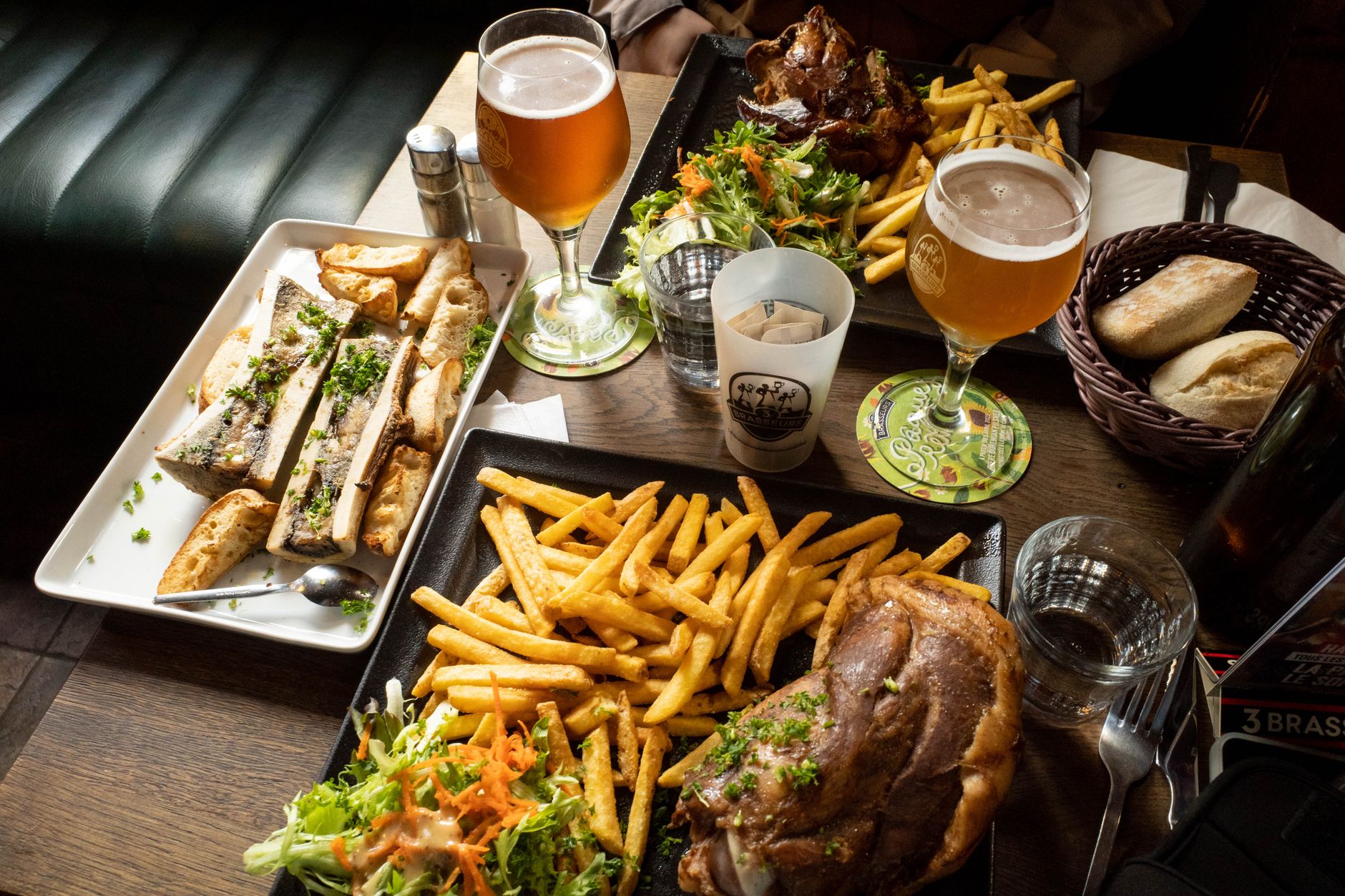 A hearty meal with fries, salad, and beer served on a rustic wooden table. (Photo: Bingqian Li / Pexels)
Frequently Asked Questions
Q: When is the Namhae German Village beer festival?
A: The festival is typically held in early October each year. The confirmed 2026 dates will be announced on the Namhae County official website, so check there before finalizing plans. During the festival, parking lots and nearby accommodations fill up quickly — book your room at least a month in advance if you're planning to attend.
Q: Is there an admission fee for the village?
A: No — the village itself is free to explore at your own pace. A few attractions, like the German Exhibition Hall and the neighboring Wongye Art Village, charge modest admission fees. Parking is available at the public lot near the village entrance; during peak season, arrive in the morning to secure a spot.
Q: What else is there to see nearby?
A: Within walking distance, you have the Mulgeon Windbreak Forest — a Natural Monument forest trail with a pebble beach. The Wongye Art Village sits directly next door. About 15 minutes away by car, Mijo Harbor serves ultra-fresh seafood, and a bit farther on, Boriam Hermitage on Geumsan Mountain delivers the best ocean panorama on the island. A half day covers the village plus the forest; a full day lets you add Mijo Harbor and Boriam.
Q: Is it a good destination for families with kids?
A: Yes, it works well for families. The German Exhibition Hall doubles as a history lesson for children, and most restaurants and cafes welcome families. Kid-friendly menu options like sausages and pretzels are everywhere. One caveat: the village is built on a fairly steep hillside, so strollers can be a struggle — a baby carrier makes life much easier.
Final Thoughts
That wraps up this Namhae German Village travel guide — from the village's remarkable history to its beer culture, pork knuckle restaurants, ocean-view cafes, photo spots, itineraries, and accommodation tips. Here are the essentials one more time:
- The scenery: Orange-roofed German houses above Mulgeon Harbor, walkable in 60–90 minutes
- The food: Schweinshaxe, wurst platters, and schnitzel with German beer, at roughly 30,000–50,000 won per person
- The tips: Avoid weekend lunch rush, and book accommodations early for the October beer festival
- The extended route: Mulgeon Windbreak Forest → Wongye Art Village → Mijo Harbor → Boriam Hermitage
In summer, a cold weissbier and a sea breeze await; in autumn, the energy of an Oktoberfest-style festival. Whichever season you choose, carve out at least half a day for the German Village on your Namhae itinerary — it's the kind of place that makes you double-check which country you're standing in. If this guide helped with your planning, share it with your travel companions, and safe travels to Korea's southern coast!