
10 Best Places to Visit in Korea (Even Locals Overlook)
Discover the best places to visit in Korea, from Gyeongbokgung Palace to Busan's Gamcheon Culture Village — 10 spots even locals underrate.
Best Places to Visit in Korea: 10 Unforgettable Spots (Including the Ones Locals Overlook)
Planning a trip to South Korea and wondering where to start? You're in good company. As of mid-2026, the global obsession with K-pop, K-dramas, and Korean food shows no signs of slowing down, and travelers from around the world are searching for the best places to visit in Korea in record numbers.
Here's the interesting part: the places international visitors fall in love with aren't always the ones you'd expect from a guidebook. A quiet alleyway lined with traditional rooftops, a 24-hour convenience store, a late-night bathhouse — spaces that locals walk past without a second glance often turn out to be the most memorable stops of the entire trip. In this guide, we'll cover the best places to visit in Korea from Seoul to the southern coast, plus sample itineraries for different trip lengths and practical tips that will save you real headaches on the ground.
What Do International Travelers Actually Love Most About Korea?
Look at reviews on global travel platforms and social media mentions, and a consistent shortlist emerges: Gyeongbokgung Palace, Bukchon Hanok Village, Myeongdong, Hongdae, Busan's Gamcheon Culture Village, and Jeonju Hanok Village. No big surprises there. But dig into why travelers love these places, and the answers get more interesting.
First, there's the hanok and alleyway culture. While big landmarks draw the crowds, what travelers rave about most is the simple experience of wandering narrow lanes framed by low stone walls and curved tile roofs — a streetscape that exists almost nowhere else in the world.
Second, the night views. The panorama of Seoul from Namsan Mountain, the lights of Gwangan Bridge in Busan, the glow of bridges over the Han River — all of it amplified by something many visitors mention with genuine amazement: you can wander a metropolis of ten million people at midnight and feel completely safe.
Third, and perhaps most surprisingly, everyday spaces. Instant ramyeon at a riverside convenience store, a midnight snack run, an afternoon at a jjimjilbang (Korean bathhouse). For visitors, the most exotic experiences in Korea are often the most ordinary ones. The best places to visit in Korea, it turns out, aren't necessarily the "special" places — they're the most Korean places.
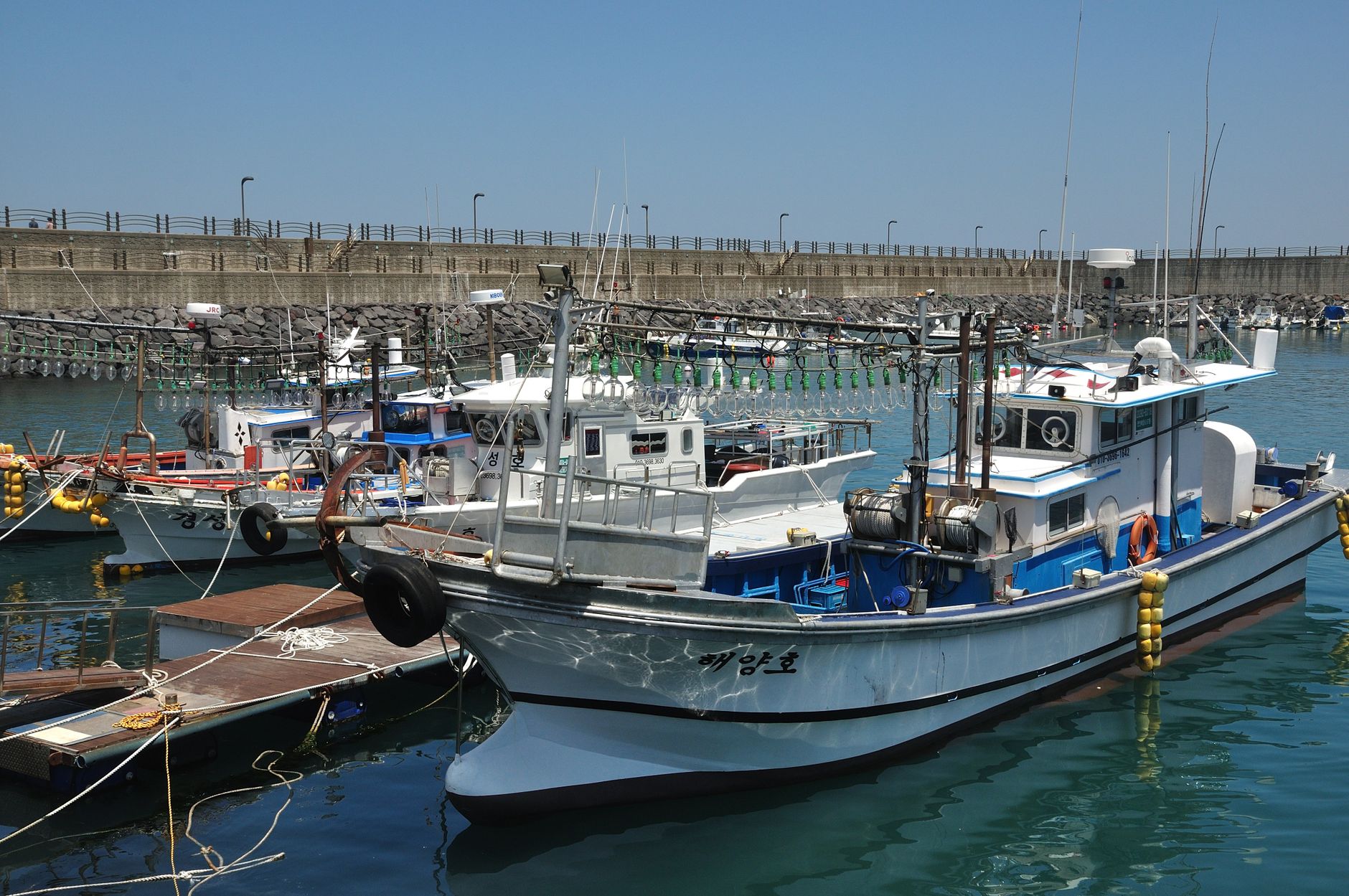 Fishing vessels docked at a harbor in South Korea under clear blue skies. (Photo: Coman Yu / Pexels)
Seoul Essentials: The Three Faces of Gyeongbokgung, Bukchon, and Hongdae
Seoul's magic lies in the fact that six centuries of history and cutting-edge modernity coexist just a few subway stops apart.
The first face is Gyeongbokgung Palace, the grandest of Seoul's five royal palaces. Here's a tip most first-timers don't know: if you rent a hanbok (traditional Korean attire), palace admission is free. Rental shops cluster around the palace gates, and strolling the royal grounds in period dress has become practically a rite of passage. It transforms sightseeing into something more immersive — you're not just looking at history, you're stepping into it.
The second face is Bukchon Hanok Village, an easy walk from the palace. Hundreds of traditional hanok houses spill down the hillside between two palaces, and the photo opportunities are endless. One thing to keep in mind: real families live here, so keep voices low and be respectful with your camera.
The third face is Hongdae and Seongsu. After a day steeped in tradition, spend the evening in Seoul's youth districts — street busking performances, one-of-a-kind cafes, and indie boutiques packed into buzzing neighborhoods. Seongsu, often called the "Brooklyn of Seoul," is where converted warehouses now house some of the city's coolest coffee shops and pop-up stores.
A proven one-day route: Gyeongbokgung with a hanbok in the morning, a stroll through Bukchon and Samcheong-dong around lunchtime, street food at Gwangjang Market in the afternoon, then Hongdae or Seongsu in the evening. That's 600 years of history in a single day.
Beyond Seoul: Busan, Jeonju, and Gyeongju
Seeing only Seoul means seeing only half of Korea. Some of the best places to visit in Korea require a train ticket — and they're absolutely worth it.
Busan, Korea's second city, is the most popular destination after Seoul among international travelers. Its crown jewel is Gamcheon Culture Village, where candy-colored houses stack up a steep hillside like a Korean Santorini — one of the most photographed spots in the country. Add Haeundae and Gwangalli beaches, the pre-dawn energy of Jagalchi Fish Market, and the seaside lanes of Huinnyeoul Culture Village, and you get a city where mountains, ocean, and markets blend into something unforgettable. The KTX high-speed train gets you there from Seoul in about two and a half hours, making it perfect for an overnight trip.
Jeonju Hanok Village is a pilgrimage site for food lovers. This is the birthplace of bibimbap, and beyond the famous rice bowls and bean sprout soup, the real joy is grazing your way through the street snacks that line the hanok-filled lanes. Renting a hanbok here has a completely different feel from Seoul — slower, more small-town, more atmospheric.
Gyeongju is often called "the museum without walls," and the nickname is earned: the entire city is an open-air archaeological site from the ancient Silla Kingdom. The showstopper is Donggung Palace and Wolji Pond after dark, when illuminated pavilions reflect perfectly on still water — consistently one of the most gushed-about sights in traveler reviews. Pair it with a nighttime walk around Cheomseongdae, one of the oldest astronomical observatories in Asia.
A K-Food Pilgrimage: Markets and Meals Worth Queuing For
No list of the best places to visit in Korea is complete without talking about food — arguably the country's greatest attraction.
Start at Gwangjang Market in Seoul. Sitting on a plastic stool at a market stall, eating mung bean pancakes (bindaetteok), addictively simple mini gimbap rolls, and yukhoe (Korean beef tartare) — this is as authentically local as it gets, which is exactly why it went viral globally. Fair warning: it's now famous enough that lines can be long. For a mellower version of the same experience, try Mangwon Market or Tongin Market, where the neighborhood-market atmosphere is still intact.
As for what to eat, a few dishes consistently blow visitors away:
- Korean fried chicken — the "chimaek" ritual (chicken + maekju, meaning beer) is a cultural experience in itself, not just a meal.
- Samgyeopsal (pork belly BBQ) — grilling the meat yourself, wrapping it in lettuce, and watching the endless free side dishes get refilled turns dinner into an event.
- Tteokbokki and gimbap — Korea's beloved street food staples. Pick a shop that lets you adjust the spice level if you're heat-averse.
The pattern here: the highest-rated food experiences aren't fancy restaurants but places with a participatory element — old-school joints with local lines out the door, grill-it-yourself BBQ houses, market stalls. And if spicy food isn't your thing, don't worry. Mild classics like seolleongtang (ox bone soup), galbitang (short rib soup), and bulgogi are just as beloved.
Sample Itineraries: How Long Do You Have?
Your strategy depends entirely on your trip length.
One day (layover or day trip): Don't overreach — stay in Seoul. Gyeongbokgung with a hanbok, a walk through Bukchon, lunch at Gwangjang Market, and the night view from Namsan. Those four stops alone deliver a lasting impression of Korea.
Three days: Day one is the classic Seoul route above. Day two covers modern Seoul — Hongdae, Seongsu, and the Han River parks. Day three is your choice: a side trip to Suwon's UNESCO-listed Hwaseong Fortress or Incheon's Chinatown, or a shopping-and-cafe day back in the city.
One week: Split it roughly into three days in Seoul, two days in Busan, and one or two days in Jeonju or Gyeongju. That combination covers tradition, urban energy, coastline, and ancient history — the full spectrum of the best places to visit in Korea in a single trip.
A few practical tips that make a real difference:
- Transportation: Grab a T-money transit card (or a tourist transit pass) as soon as you land — it works on subways, buses, and taxis nationwide. For maps, skip Google Maps; it's limited in Korea. Naver Map and Kakao Map both have accurate English modes.
- Reservations: Popular restaurants, hanbok rentals, and KTX train tickets can sell out during peak season. Book ahead.
- Payment: Korea is nearly cashless, but some smaller shops still don't accept foreign cards. Carry a modest amount of cash as backup.
The Everyday Korea That Deserves a Spot on Your Itinerary
Some of the most talked-about "attractions" in Korea aren't attractions at all.
Convenience stores are a genuine phenomenon among visitors. Open 24 hours, equipped with instant ramyeon cooking machines, and furnished with outdoor tables where you can snack under the night sky — it's a micro-experience of Korean life you won't find replicated elsewhere. Buying a cup of ramyeon at a Han River convenience store and eating it by the water is, no exaggeration, a bucket-list item for many travelers.
Jjimjilbangs (Korean bathhouses) are another one. Bathing, sleeping, eating, and entertainment all under one roof, at any hour — a completely unique cultural institution. The details are half the fun: sipping sikhye (sweet rice drink), cracking open eggs baked in the kiln room, and folding your towel into the iconic "sheep's head" hat.
Then there's Korea's cafe culture. Few cities on earth pack in as many independent cafes per block as Seoul, each with its own interior concept and signature menu. Cafe-hopping through a single neighborhood can easily fill an afternoon.
The lesson: when you're planning the best places to visit in Korea, leave room in your schedule for the unglamorous stuff. It often ends up being the highlight.
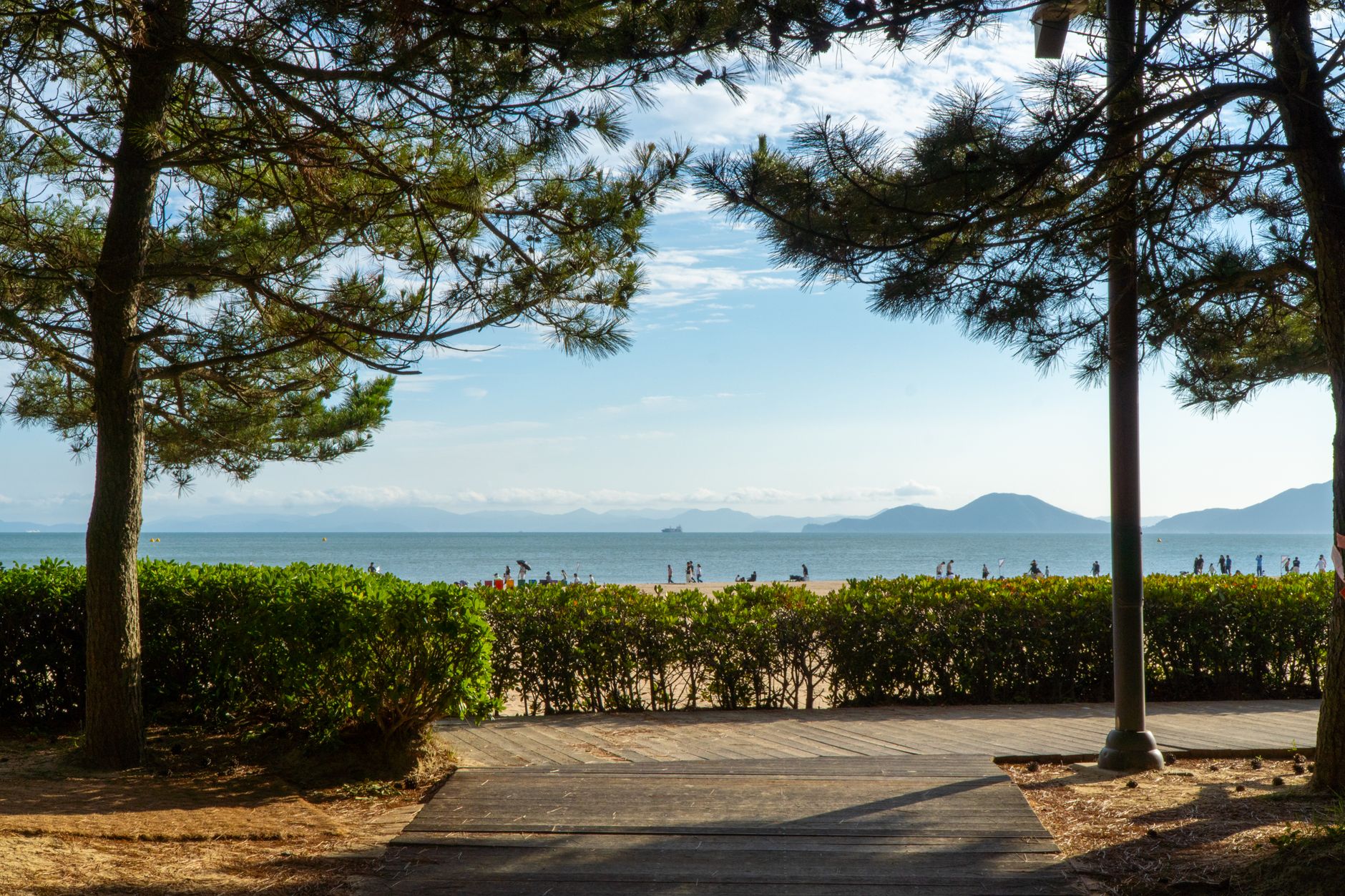 A beautiful beach scene framed by trees and shrubs, with people enjoying the shore in South Korea. (Photo: Hello Photho / Pexels)
Frequently Asked Questions
Q: I only have three days in Korea. Where should I go?
A: Stay Seoul-focused. Day one: Gyeongbokgung in a hanbok, Bukchon, and Gwangjang Market. Day two: modern Seoul — Hongdae, Seongsu, and the Namsan night view. Day three: a side trip to Suwon or Incheon, or shopping and cafes. If you can only do one thing, make it the hanbok-and-palace experience — it's the most consistently loved activity among first-time visitors.
Q: What Korean foods do international visitors love most?
A: Surveys and social media consistently rank Korean fried chicken, samgyeopsal (pork belly BBQ), gimbap, tteokbokki, and bibimbap at the top. Notably, many travelers say the communal dining culture — chimaek with friends, group BBQ dinners — mattered more than any single dish. Vegetarians can enjoy bibimbap without meat or a temple food experience, and halal-certified restaurants cluster around the Itaewon area in Seoul.
Q: Can I travel Korea without speaking Korean?
A: Absolutely. Translation apps like Papago and Google Translate handle voice and image translation well, and major tourist areas and the entire subway system have thorough English signage. If you want extra support, book an English-language walking tour for one day of your trip. Younger Koreans in Seoul often speak some English, and locals are generally patient and helpful with visitors.
Q: When is the best time to visit Korea?
A: Peak seasons are April, when the cherry blossoms bloom, and October to November for autumn foliage — glorious weather, but expect higher prices and crowds. Low seasons are the rainy stretch from late June through July and the cold snap of January to February, when flights and hotels are noticeably cheaper. Winter has its own appeal (ski resorts, snow-dusted palaces), and summer works well if you mix indoor plans with beach time in Busan.
Final Thoughts
Here's the short version of the best places to visit in Korea: in Seoul, connect tradition and modernity in a single day through Gyeongbokgung, Bukchon, and Hongdae. Beyond the capital, let Busan, Jeonju, and Gyeongju show you the coast, the food, and a thousand years of history. Make time for a K-food pilgrimage through Gwangjang Market and a chimaek night — and don't skip the "ordinary" experiences like convenience stores and jjimjilbangs, because they routinely steal the show.
Match your itinerary to your trip length rather than cramming everything in, sort out your transit card and key reservations in advance, and the rest will take care of itself. Korea rewards curious travelers — the kind who wander one alley past the famous photo spot. Wherever your trip takes you, chances are the moment you'll talk about for years won't be the one on the postcard.