10 Must Visit Places in Korea Even Locals Don't Know
Discover 10 must visit places in Korea, from Seoul's royal palaces to Busan's beaches and K-food alleys, with insider tips for planning your trip.
10 Must-Visit Places in Korea: Hidden Gems Even Locals Overlook
Ask anyone who has been to South Korea what surprised them most, and you'll rarely hear about the famous landmarks first. Instead, they'll tell you about grilling their own pork belly at a smoky neighborhood barbecue joint, walking home alone at 2 a.m. and feeling completely safe, or watching a palace guard ceremony in the morning and standing under futuristic skyscrapers by afternoon. As of summer 2026, with K-pop, K-dramas, and Korean food more popular worldwide than ever, tourist arrivals keep climbing — and yet most first-time visitors still only scratch the surface.
This guide rounds up the must-visit places in Korea, from Seoul's royal palaces to Busan's beaches and beyond, plus the practical tips that make a trip run smoothly. Whether you're planning your first visit, helping a friend build an itinerary, or curious what makes this country such a compelling destination, here's everything you need — organized so you can actually use it.
Summer travel season is in full swing, so let's dive in.
3 Things That Genuinely Surprise First-Time Visitors to Korea
The first is the coexistence of ancient tradition and hyper-modernity. Few cities on Earth let you spend your morning strolling through a 600-year-old royal palace in traditional dress, then spend your afternoon admiring the futuristic curves of Dongdaemun Design Plaza (DDP) or the skyscrapers of Gangnam. In Seoul, centuries-old palaces and hanok villages sit right in the middle of one of the world's most technologically advanced cities — and that contrast leaves a powerful first impression.
The second is the sheer convenience and safety. Streets that feel secure even late at night, cafes and convenience stores open into the early hours, subway trains arriving every one to two minutes. Travelers routinely marvel at the sight of laptops left unattended at cafe tables while their owners step away — a small cultural detail that shows up in nearly every trip report about Korea.
The third is the thrill of stepping inside the content you already know. Eating street food at a pojangmacha (tent bar) you first saw in a K-drama, cooking instant ramyeon by the Han River like a variety-show cast member, walking down a street from your favorite music video — for millions of fans, a trip to Korea isn't just sightseeing. It's a pilgrimage. That's a big part of why inbound tourism has surged past pre-pandemic levels and keeps growing.
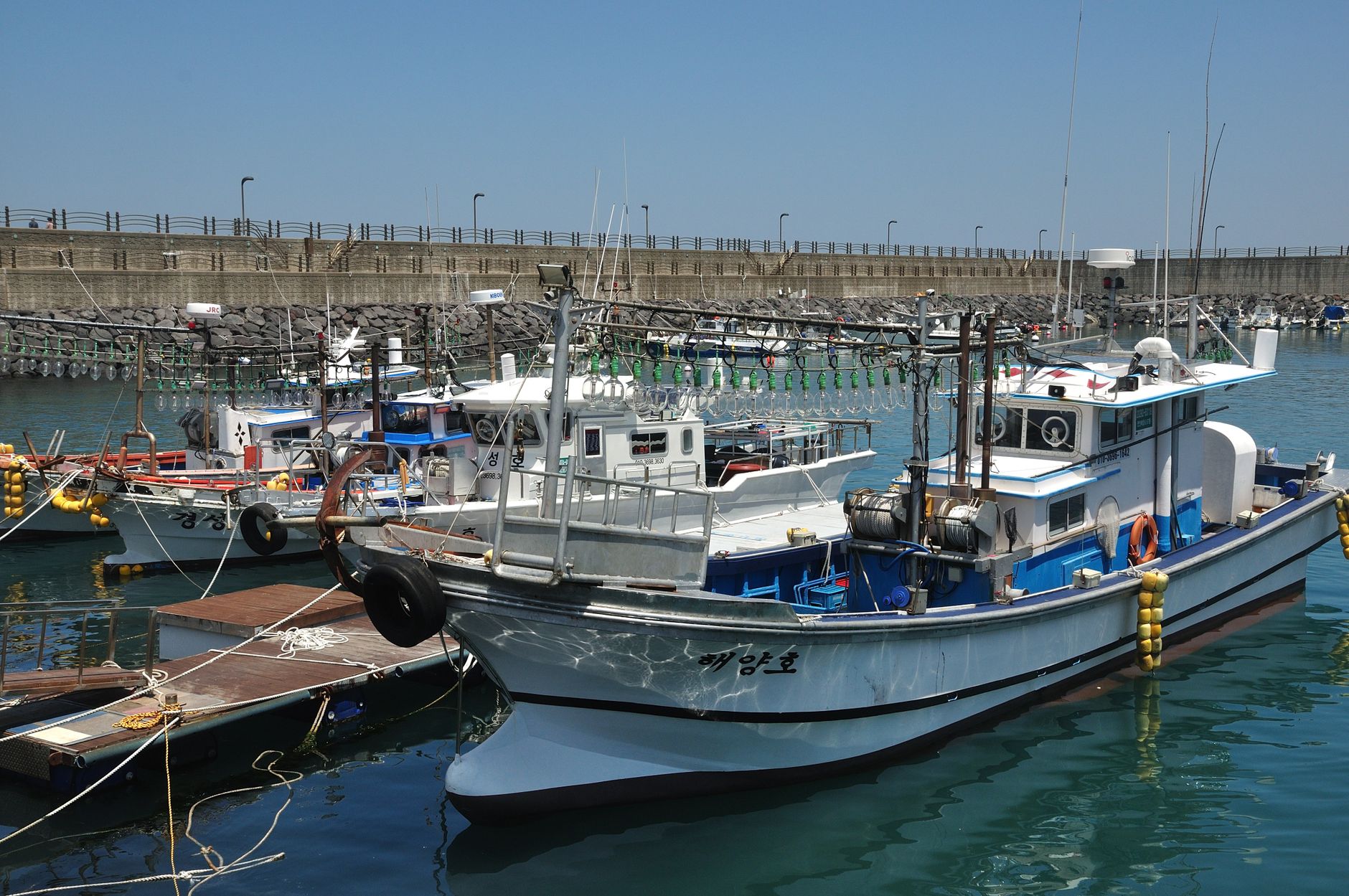 Fishing vessels docked at a harbor in South Korea under clear blue skies. (Photo: Coman Yu / Pexels)
Seoul Essentials: From Gyeongbokgung Palace to the Han River
Any list of must-visit places in Korea starts in Seoul — and Seoul starts with Gyeongbokgung Palace. Here's the insider move: rent a hanbok (traditional Korean dress) from one of the many shops near the palace, because visitors wearing hanbok typically get free admission. The royal guard changing ceremony is usually held twice a day, morning and afternoon — check the official palace schedule before you go, and you'll be rewarded with one of the most photogenic scenes in the city. From the palace, it's a ten-minute walk to Bukchon Hanok Village, a hillside neighborhood of traditional Korean houses that rounds out a perfect half-day itinerary. One caveat: Bukchon is a real residential area, so keep your voice down and respect posted quiet hours.
From there, choose your neighborhood based on your vibe. Myeongdong is the classic pick for shopping and street food. Hongdae, near Hongik University, delivers youthful energy, indie shops, and live busking on nearly every corner. Seongsu — often called the "Brooklyn of Seoul" — is where you'll find the city's most stylish cafes and rotating pop-up stores, and it has become one of the fastest-growing destinations for international visitors in recent years. All three are easy to reach by subway.
End your Seoul days at a Han River park. Grab instant ramyeon from a riverside convenience store (they have dedicated machines to cook it), order Korean fried chicken delivered straight to your picnic spot, and crack open a cold beer — the beloved local combo known as chimaek (chicken + beer). Watching the sunset from a picnic mat at Yeouido or Ttukseom Hangang Park is the moment most travelers say they finally got Seoul.
Beyond Seoul: Busan, Jeonju, and Gyeongju
If you only see Seoul, you've only seen half the story. Some of the true must-visit places in Korea are outside the capital — and thanks to the KTX high-speed rail, they're remarkably easy to reach.
Busan is the ideal overnight trip. Spend day one wandering the rainbow-colored alleys of Gamcheon Culture Village, feasting on fresh seafood at Jagalchi Market (Korea's largest fish market), and finishing with the glittering night view over Gwangalli Beach. On day two, hit Haeundae Beach and ride the scenic coastal train at Blueline Park, which runs along the cliffs east of the city. The KTX gets you from Seoul to Busan in about 2.5 hours.
Jeonju is the capital of traditional Korean culture. Rent a hanbok and wander the lanes of Jeonju Hanok Village, home to hundreds of traditional houses, then sit down for the original Jeonju bibimbap — this city is where the iconic mixed-rice dish was perfected. Add a hanji (traditional paper) craft workshop and tea at a quiet teahouse, and you've experienced centuries of Korean culture in a single day.
Gyeongju, the thousand-year-old capital of the ancient Silla Kingdom, is nicknamed "the museum without walls" — and it earns it. The highlights are Bulguksa Temple and the Seokguram Grotto, both UNESCO World Heritage Sites, along with Cheomseongdae, widely regarded as the oldest surviving astronomical observatory in East Asia. Time your visit for the evening: when the lights come on around Cheomseongdae and the Donggung Palace and Wolji Pond complex, the whole area transforms into something magical.
The K-Food Experiences You Can't Skip
Three dishes consistently win over international visitors: samgyeopsal (Korean BBQ pork belly), Korean fried chicken, and street food. Korean BBQ is as much an event as a meal — you grill the meat yourself at your table, then wrap it in fresh lettuce with garlic, ssamjang sauce, and whatever else you like. Korean fried chicken, with its shatteringly crisp coating and sweet-spicy glazes, needs no introduction at this point. And street food classics like tteokbokki (spicy rice cakes), gimbap (seaweed rice rolls), and sundae (Korean blood sausage) are cheap enough that trying everything is entirely reasonable.
For a market crawl, Gwangjang Market in Seoul is the headliner: crispy mung bean pancakes, addictively simple mini gimbap, and yukhoe (Korean beef tartare) all under one roof, with an electric atmosphere that's an attraction in itself. Want something less touristy? Head to Mangwon Market, where prices are lower, crowds are thinner, and you'll be shopping alongside actual locals.
One honest warning: respect the spice levels. What Koreans call "medium" can be genuinely punishing for unaccustomed palates — tteokbokki, buldak (fire chicken), and spicy braised ribs are the usual culprits. Ask for "less spicy" when ordering, or start with milder dishes like bulgogi, japchae, or gimbap. If you have dietary restrictions, plan ahead: the Itaewon district has a cluster of halal-certified restaurants, and vegan and Buddhist temple-cuisine restaurants can be found across Seoul with a quick search.
When to Visit: Korea Changes Completely by Season
Korea has four sharply distinct seasons, and your trip will look completely different depending on when you come. In spring, cherry blossoms take over — the Jinhae Gunhangje Festival near Busan and Yeouido's blossom-lined boulevards in Seoul are the marquee spots, with peak bloom usually landing between late March and early April. In autumn, the fiery foliage of Naejangsan National Park and the view of crimson-tinted Seoul from Namsan Mountain are unbeatable. Summer — right now — is the season for beach cities like Busan and Gangneung, cool mountain valleys, and the late-night energy of Han River parks and night markets that only really comes alive in the warm months.
Themed itineraries are worth planning, too. K-pop fans map out pilgrimages to entertainment company headquarters and music video filming locations; drama fans hunt down the alleys and cafes made famous on screen. But here's the thing many visitors discover: the most memorable experiences are the ones built into everyday Korean life. Spend an afternoon at a jjimjilbang (Korean bathhouse-sauna), fold your towel into the iconic "lamb's head" shape, and snack on sikhye (sweet rice drink) and sauna-baked eggs. Or book a temple stay and spend a night at a mountain monastery, waking before dawn for chanting and sharing a monastic meal. You can't buy those experiences anywhere else in the world.
Practical Tips That Make or Break the Trip
Transportation setup is half the battle. As soon as you land, pick up a T-money card at any convenience store or subway station — one rechargeable card covers subways, buses, and even taxis nationwide. Long-stay visitors sometimes look into unlimited-ride passes, but for short-term travelers, a standard rechargeable T-money is the simplest choice. From Incheon Airport, the AREX express train or an airport limousine bus will get you into central Seoul comfortably.
Set up your apps before you need them. Google Maps is famously unreliable for walking and driving directions in Korea — download Naver Map or Kakao Map (both have English settings) instead. Papago handles translation better than most alternatives for Korean, including restaurant menus via camera translation. And set up Kakao T for hailing taxis without any language barrier.
Book ahead, and time it right. Temple stays, evening palace tours, popular hanbok rental shops, and famous restaurants often require reservations. Just as important is knowing what to avoid: Myeongdong and Bukchon on weekend afternoons are wall-to-wall crowds, and Gyeongbokgung Palace closes one day a week (usually Tuesdays — always double-check before you go). Weekday mornings win every time, for photos and for sanity.
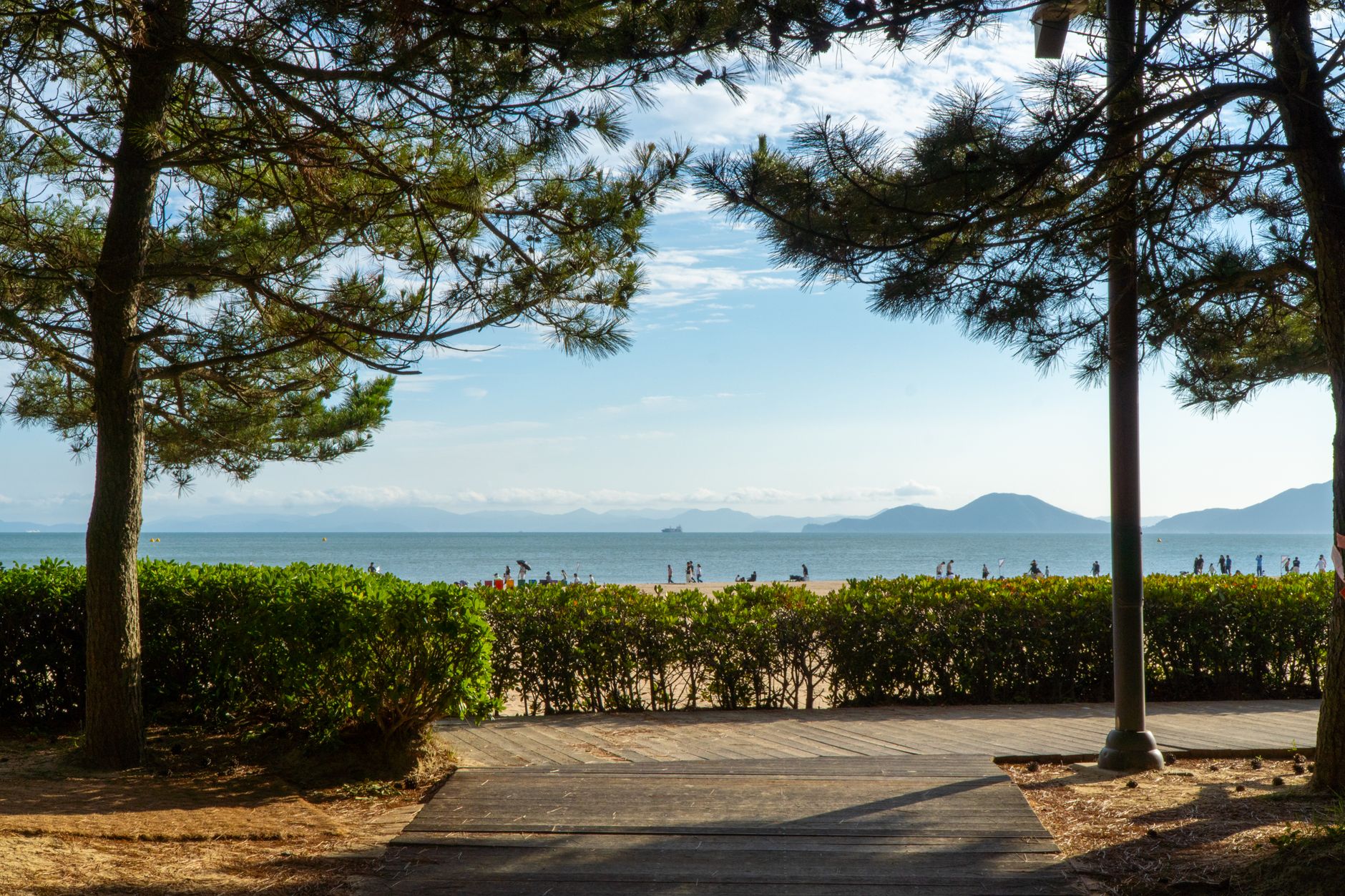 A beautiful beach scene framed by trees and shrubs, with people enjoying the shore in South Korea. (Photo: Hello Photho / Pexels)
Frequently Asked Questions
Q: I only have 3 days in Korea. What should I prioritize?
A: Stay focused on Seoul. Day one: Gyeongbokgung Palace in hanbok, Bukchon Hanok Village, then shopping and street food in Myeongdong. Day two: cafe-hop through Hongdae or Seongsu, then wind down with ramyeon and chimaek at a Han River park at sunset. Day three: a Gwangjang Market food crawl, finishing at Namsan Tower or DDP. That covers tradition, modern city life, and everyday Korean culture in one compact trip.
Q: What Korean foods do international visitors love most?
A: Korean fried chicken, samgyeopsal (BBQ pork belly), and bibimbap consistently top the list. Non-spicy dishes like gimbap, japchae, and bulgogi are safe bets for anyone, while tteokbokki and buldak divide opinion sharply — start with the mildest spice level available.
Q: Can I travel Korea independently without speaking Korean?
A: Absolutely. Seoul's subway has full English signage and announcements, translation apps like Papago handle most everyday situations, and if you ever get stuck, the 1330 Korea Travel Hotline offers 24-hour assistance in English and several other languages.
Q: Which cities outside Seoul are worth the trip?
A: Busan, Jeonju, and Gyeongju are the top three. Busan (about 2.5 hours by KTX) delivers beaches, seafood markets, and night views; Jeonju (about 1 hour 40 minutes by KTX) is the heart of traditional culture and food; Gyeongju (about 2 hours by KTX) is an open-air museum of ancient history. If you can only add one, choose by taste: ocean, tradition, or history.
Final Thoughts
The must-visit places in Korea all share one defining quality: contrast. Royal palaces beside glass towers, centuries-old markets a subway stop from designer department stores, silent mountain temples and steamy neon-lit bathhouses — tradition and modernity, stillness and energy, all packed into a single trip. Start with the Gyeongbokgung-to-Han-River circuit in Seoul, extend to Busan, Jeonju, or Gyeongju, load up on K-food and seasonal highlights, and sort your T-money card and apps before you land. That's the whole playbook.
If a trip to Korea is on your radar, use this guide to sketch out your itinerary this weekend — and if you know someone planning their first visit, send this their way. Korea rewards travelers who come prepared, and now you are.