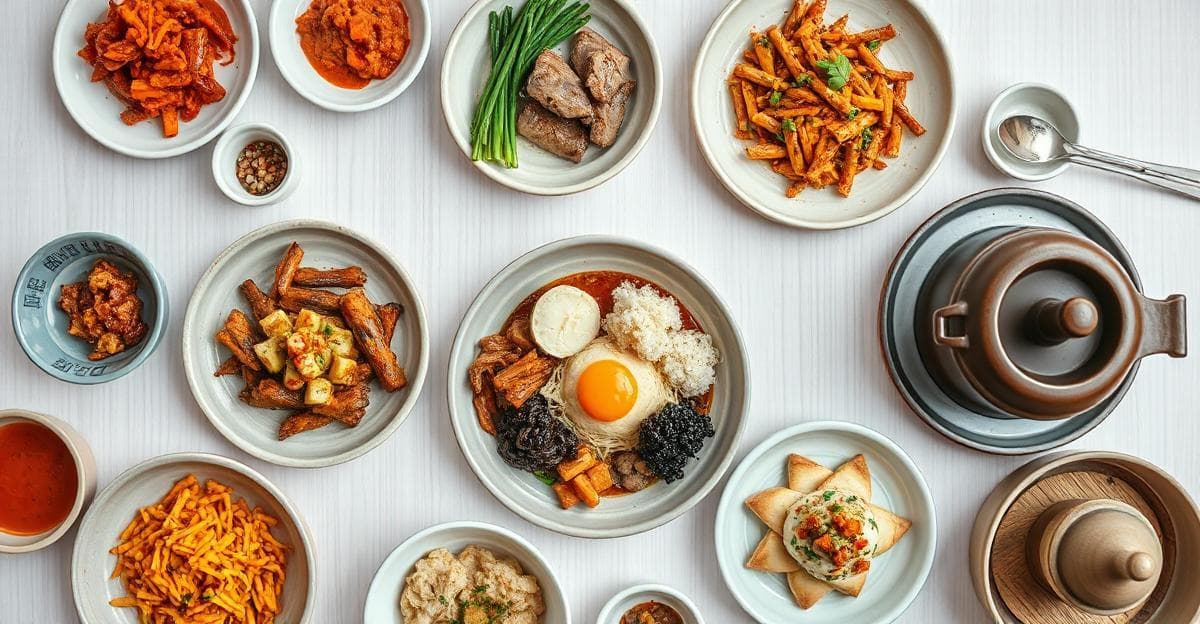
Korean Food List: 50+ Must-Try Dishes by Category
Explore the ultimate Korean food list — rice dishes, stews, BBQ, pancakes, and kimchi — plus regional specialties and the stories behind each dish.
The Ultimate Korean Food List: Every Major Dish Organized by Category
If you've ever fallen down a rabbit hole searching for a complete Korean food list, you know how overwhelming it can get. Rice dishes, soups, stews, barbecue, pancakes, kimchi — the sheer variety of Korean cuisine is staggering, and most guides either skim the surface or bury you in names you can't pronounce yet. As of 2026, Korean food has firmly established itself as a global phenomenon, from Korean fried chicken shops in London to kimchi on grocery shelves across America. More people than ever want a well-organized map of what Korean cuisine actually includes.
This guide breaks down Korean cuisine into clear categories based on cooking method and ingredients, so you can see the whole landscape at a glance. Think of it as an encyclopedia-style Korean food list — but one that also explains why the dishes are grouped this way, so beginners can actually make sense of it. Whether you're planning a trip to Seoul, introducing a friend to Korean food, or just deciding what to order next, this list has you covered.
The world of Korean cooking is wider and deeper than most people expect. Let's go through it, one category at a time.
What Is Korean Cuisine? Definition and Key Characteristics
Korean cuisine — hansik in Korean — is built around a table-setting tradition called bapsang, where a bowl of rice sits at the center, surrounded by soup and an array of side dishes. The formula "rice + soup + banchan (side dishes)" forms the skeleton of every meal, with kimchi and fermented sauces almost always making an appearance. Unlike Western dining, where courses arrive one at a time, a Korean meal spreads everything across the table at once, and everyone shares.
The other defining pillar is fermentation. Kimchi, doenjang (soybean paste), gochujang (chili paste), and soy sauce form the flavor backbone of the entire cuisine. Add to that a strong emphasis on seasonality — cooking with whatever each season provides — and the traditional philosophy of yaksik dongwon, the idea that food and medicine share the same root, and you get a cuisine that has long aimed to nourish as much as satisfy.
This is also why any well-organized Korean food list sorts dishes by cooking method (rice, soup, stew, grilled, pan-fried) and by ingredient. The same ingredient becomes a completely different dish depending on whether it's boiled, grilled, or seasoned raw — so classification by technique is the most intuitive framework for understanding Korean food.
 Peaceful beach view with Seongsan Ilchulbong peak on Jeju Island, South Korea. (Photo: Hyunwoo Cho / Pexels)
Rice, Porridge, and Noodle Dishes
At the heart of Korean cuisine sits rice — and the variety within this single category is impressive. There's bibimbap, the famous mixed rice bowl with seasoned vegetables and gochujang; bokkeumbap, fried rice that turns leftovers into a meal; yeongyangbap, "nutrition rice" steamed with beans, chestnuts, and jujubes; ssambap, rice wrapped in fresh lettuce and perilla leaves; and gukbap, rice served submerged in hot soup. Any one of these makes a complete, satisfying meal on its own.
Porridge (juk) is Korea's go-to comfort food and recovery meal — easy to digest and endlessly adaptable. Classics include plain white rice porridge, luxurious abalone porridge (jeonbokjuk), red bean porridge (patjuk) traditionally eaten on the winter solstice, and silky pumpkin porridge (hobakjuk). The magic of juk is how dramatically the flavor and nutrition change with each ingredient.
Noodles deserve their own spotlight. There's naengmyeon, chilled buckwheat noodles in icy broth; kalguksu, hand-cut noodles in a warming soup; janchi guksu, "banquet noodles" once served at celebrations; bibim guksu, spicy-tangy mixed noodles; and sujebi, hand-torn dough flakes simmered in broth. Once you understand this rice-porridge-noodle trio, you've grasped half of any Korean food list already.
Soups, Broths, Stews, and Hot Pots
A Korean table without something soupy feels incomplete. Korean cuisine actually distinguishes several types of liquid dishes, and knowing the difference helps enormously when reading a menu.
Guk (soup) is lighter, with clear broth and generous liquid. Standouts include miyeokguk (seaweed soup, traditionally eaten on birthdays and by new mothers), refreshing kongnamulguk (bean sprout soup), bugeoguk (dried pollack soup, a legendary hangover cure), and tteokguk, the rice cake soup eaten on Lunar New Year. These are everyday soups you could eat daily without tiring of them.
Tang is simmered far longer than guk, producing a richer, more concentrated broth. Think milky-white seolleongtang (ox bone soup), samgyetang (whole young chicken stuffed with ginseng and rice — Korea's classic summer stamina dish), celebratory galbitang (beef short rib soup), and fiery gamjatang (pork backbone stew with potatoes). One bowl is a full meal, which is why tang dishes dominate Korean restaurant menus.
Jjigae (stew) and jeongol (hot pot) flip the ratio: more substance, less liquid, bolder seasoning. The national favorites are kimchi jjigae and doenjang jjigae (soybean paste stew), along with silky sundubu jjigae (soft tofu stew) and budae jjigae — the famous "army stew" born after the Korean War, combining ham, sausage, and instant noodles in a spicy broth. Top the category off with sinseollo, an ornate royal court hot pot, and your soup section is complete.
Grilled, Stir-Fried, Braised, and Steamed Dishes
Grilled dishes (gui) are the crown jewels of Korean dining out. Bulgogi — thin-sliced beef in a sweet-savory marinade — is probably Korea's most internationally beloved dish. Samgyeopsal (grilled pork belly) is arguably the country's true soul food, galbi (marinated short ribs) marks special occasions, and simple grilled fish anchors everyday home meals. The interactive tabletop-grilling culture is a huge part of why Korean barbecue has won over diners worldwide.
Stir-fries (bokkeum) rely on high heat and speed to lock in flavor. Favorites include spicy jeyuk bokkeum (pork stir-fry), chewy ojingeo bokkeum (spicy squid), and nakji bokkeum (stir-fried octopus), affectionately known as a "rice thief" because it makes you devour bowl after bowl. All three work beautifully spooned over rice.
Braised (jorim) and steamed (jjim) dishes are defined by deep, slow-developed flavor. Galbijjim (braised short ribs) headlines holiday feasts, agwijjim (spicy braised monkfish with bean sprouts) is a beloved restaurant specialty, jangjorim (soy-braised beef) is a staple side dish, and godeungeo jorim (mackerel braised with radish) is home cooking at its finest. Master these four techniques and you've covered the entire main-course section of the Korean food list.
Savory Pancakes, Seasoned Vegetables, and Side Dishes
Koreans say rainy days call for jeon — savory pancakes made by pan-frying ingredients in a light batter. The lineup includes tangy kimchi jeon, generous pajeon (green onion pancake), dongeurangttaeng (mini meat patties, a holiday staple), and nutty nokdujeon (mung bean pancake). Jeon paired with makgeolli (Korean rice wine) is one of the country's most cherished food-and-drink combinations.
Namul dishes are vegetables — blanched or lightly sautéed, then seasoned — and they represent the healthiest corner of Korean cooking. Tender spinach namul, pleasantly bitter bellflower root (doraji) salad, and crunchy seasoned bean sprouts are everyday examples. These same namul double as bibimbap toppings, and they're how Koreans enjoy seasonal vegetables year-round.
Mitbanchan are preserved side dishes made to last — salty-sweet stir-fried anchovies (myeolchi bokkeum), all kinds of jangajji (pickled vegetables), and intensely savory jeotgal (salted fermented seafood). These small dishes fill every corner of the table and create the abundant spread that defines a Korean meal.
Kimchi, Fermented Pastes, and Fermented Foods
No discussion of Korean identity is complete without kimchi — and no, it isn't just one dish. The classic is baechu kimchi (napa cabbage kimchi), but the family also includes kkakdugi (cubed radish kimchi), chonggak kimchi (whole young radish kimchi), mild baek kimchi (white kimchi made without chili), and refreshing mul kimchi (water kimchi with a drinkable brine). Every region and every family makes it differently — the spectrum is far too wide to lump under a single name.
Jang, the fermented sauces, are the seasoning foundation of the cuisine: earthy doenjang (soybean paste), sweet-spicy gochujang (chili paste), umami-rich ganjang (soy sauce), and pungent cheonggukjang (fast-fermented soybean paste with a famously bold aroma). Without these, the deep flavors of Korean soups, stews, and seasoned dishes simply wouldn't exist.
Fermentation in Korea goes far beyond food preservation — it's the cultural core of the cuisine. The complex umami and reported health benefits developed through long aging are exactly why kimchi and jang have become the symbols of the Korean table.
Regional Specialties and Royal Court Cuisine
Korean food changes character dramatically by region. Jeolla Province in the southwest is famous for hanjeongsik — lavish full-course spreads where side dishes cover every inch of the table. Gyeongsang Province in the southeast leans toward bolder, saltier flavors. Gangwon Province in the mountainous east built its humble specialties around potatoes, corn, and buckwheat, while Jeju Island is the place for pristine seafood like hairtail and mackerel. Even dishes with the same name taste noticeably different from region to region — that's the charm of Korean regional cooking.
Royal court cuisine represents the pinnacle of refinement. Highlights include gujeolpan, a nine-sectioned platter of delicacies wrapped in thin wheat crepes; sinseollo, the elegant royal hot pot; and neobiani, the courtly ancestor of bulgogi. Today you can experience these dishes at high-end hanjeongsik restaurants, where the artistry and formality of palace dining live on.
The best way to explore regional food is to pair it with travel. Eating a local specialty in its hometown, made with local ingredients, turns a meal into a genuine cultural experience — one of the best reasons to venture beyond Seoul.
 Savory stir-fried noodles topped with vegetables and sesame seeds, perfect for a flavorful meal. (Photo: makafood / Pexels)
Rice Cakes, Traditional Sweets, and Drinks
Every Korean food list should end the way a Korean feast does — with traditional sweets. Tteok (rice cakes) are the signature: injeolmi dusted in roasted soybean powder, songpyeon (the half-moon rice cakes synonymous with the Chuseok harvest festival), moist and subtle baekseolgi, and smooth, chewy jeolpyeon. No Korean holiday or celebration happens without them.
Hangwa are Korea's traditional confections: honey-soaked yakgwa cookies, crispy puffed-grain gangjeong, and delicately molded dasik tea sweets. Their gentle sweetness and intricate shapes make them popular gifts to this day.
Eumcheongnyu — traditional beverages — round out the meal. Sikhye is a sweet fermented rice drink, sujeonggwa is a spiced punch fragrant with cinnamon and ginger, and hwachae is a chilled fruit punch often floated with edible flower petals. Finish a meal with one of these and you've experienced Korean dining from first bite to last sip.
Frequently Asked Questions
Q: How many main categories does Korean food fall into? By cooking method, most classifications land on six to eight broad groups: rice/porridge/noodles, soups and stews, grilled/stir-fried/braised/steamed dishes, pancakes and seasoned vegetables, kimchi and fermented sauces, and rice cakes/sweets/beverages. Layer in ingredient-based groupings (meat, seafood, vegetables) and the list gets much more granular. The easiest approach: use cooking method for the big picture, then ingredients for the details.
Q: Which Korean dishes are best for first-timers? Start with crowd-pleasers that have broad appeal: colorful bibimbap, sweet-savory bulgogi, iconic kimchi, nourishing samgyetang, and japchae (glass noodles stir-fried with vegetables). Bulgogi and japchae in particular have mild, approachable flavor profiles, making them ideal gateway dishes for anyone new to Korean food.
Q: Should I trust crowd-edited wikis for Korean food information? Community-edited sources are great for quickly scanning an overview, but accuracy and currency can vary since anyone can edit them. For definitions, history, and origins, cross-check with authoritative sources like the Korean Food Promotion Institute or Korea's National Institute of Korean Language. This is especially important for claims about a dish's historical origins, where folklore and fact often blur.
Q: Where should I travel to try regional Korean specialties? Match destinations to their signature dishes. Jeonju is the pilgrimage site for bibimbap and hanjeongsik; Gangneung on the east coast is famous for chodang sundubu (soft tofu made with seawater); Jeju Island is the place for braised hairtail and fresh mackerel sashimi. Build one regional specialty into each stop of your itinerary and you get food tourism and sightseeing in a single trip.
Final Thoughts
We've now walked through the complete Korean food list — from rice, porridge, and noodles through soups and stews, grilled and braised mains, savory pancakes and namul, kimchi and fermented sauces, regional and royal court cuisine, all the way to rice cakes, traditional sweets, and drinks. If you came here looking for a structured overview of Korean cuisine, you should now have a clear mental map of how it's organized by cooking method and ingredient.
The real magic of Korean food lies in two things: the harmony of a shared table built around rice, soup, and side dishes, and the depth of flavor that only fermentation — kimchi and jang above all — can deliver. Keep these categories in mind and you'll order with confidence at any Korean restaurant, and introduce friends to the cuisine like a pro.
Consider this Korean food list your personal checklist. Pick a dish you've never tried, hunt it down at a local Korean restaurant, or better yet, plan a trip around the regional specialties. Your Korean food adventure is just getting started — and there's a lot of delicious ground to cover.