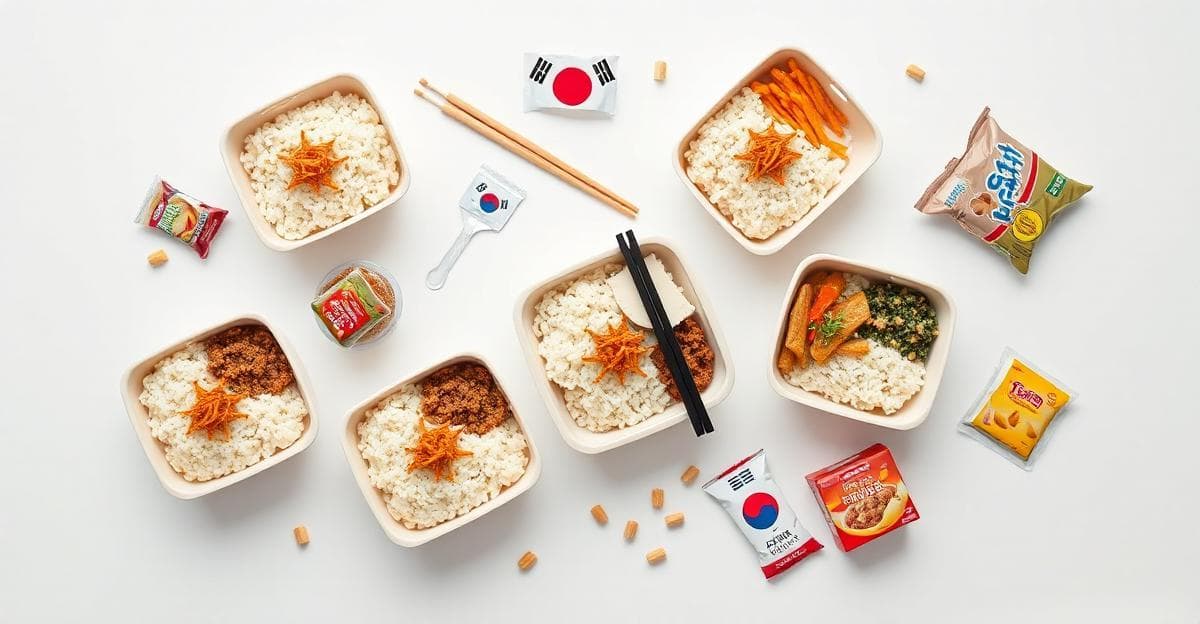
7 Reasons Korean Convenience Store Food Is So Addictive
Discover why travelers can't get enough of Korean convenience store food — from cheap, tasty lunch boxes to viral must-try picks and top menu items.
Why Foreigners Are Obsessed With Korean Convenience Store Food: 7 Reasons
If you've watched any Seoul travel vlog lately, you've probably noticed something odd: tourists aren't just lining up for Korean BBQ or street food markets anymore. They're posing for photos outside neighborhood convenience stores, arms full of lunch boxes, instant noodles, and triangle kimbap. As of mid-2026, the humble corner store has quietly become one of Korea's most talked-about tourist attractions.
Search YouTube or TikTok and you'll find endless "Korean convenience store challenge" videos, where creators eat their way through an entire GS25 or CU aisle in one sitting. What used to be a quick pit stop for locals has turned into a full-blown cultural experience — and Korean convenience store food, especially the famous dosirak (Korean-style lunch boxes), is at the center of it all.
So what exactly is driving this obsession? Here's a breakdown of the seven biggest reasons, plus the most popular items to try, how Korea's lunch boxes differ from Japan's, and insider tips to eat well for even less.
Why Are Tourists So Obsessed With Korean Convenience Store Food?
The spark, unsurprisingly, was social media. As Korean convenience store mukbang (eating show) content spread across YouTube and TikTok, the stores themselves became destinations. Add in K-dramas — where characters constantly share ramyeon and lunch boxes at the plastic tables outside a corner store — and you get millions of viewers thinking, "I want to do exactly that when I visit Korea." For many travelers, eating at a convenience store isn't a compromise; it's a bucket-list item.
Then the price tag seals the deal. A typical Korean convenience store lunch box costs around 4,000 to 6,000 won — roughly $3 to $4.50 USD — and comes packed with rice plus five to eight side dishes. For visitors from cities where a basic sandwich runs $8 or more, that's genuinely shocking value. You get a hot, complete Korean meal for less than the price of a coffee back home.
The third hook is novelty. Korean convenience stores launch new products at a relentless pace, so even if you visit the same store twice in one week, you'll likely spot lunch boxes that weren't there before. Many foreign visitors describe it as a treasure hunt — there's always something new to discover, which keeps them coming back throughout their trip.
 A tempting close-up of a sushi roll held by chopsticks, highlighting fresh ingredients. (Photo: makafood / Pexels)
The 3 Pillars: Price, Flavor, and Variety
First, price. Most Korean convenience store lunch boxes sit in that 4,000–6,000 won sweet spot, and each one is built like a miniature home-cooked meal. In an era of rising restaurant prices, plenty of Korean office workers rely on them for weekday lunches — and honestly, the portion of rice and the number of side dishes rival what you'd get at a casual Korean diner for two or three times the price.
Second, flavor. The lunch box lineup is anchored in classic Korean dishes: spicy stir-fried pork (jeyuk bokkeum), bulgogi, fried chicken, and pork cutlet. The sweet-and-spicy stir-fried pork lunch box in particular captures that signature Korean gochujang-based seasoning — bold enough to be memorable, but approachable enough for someone eating Korean food for the very first time.
Third, variety. Korea's three major convenience store chains — GS25, CU, and 7-Eleven — are locked in constant competition, rolling out new products on a near-weekly basis. That includes premium lunch boxes developed with famous restaurants and celebrity chefs, plus limited editions featuring regional specialty ingredients. This rapid product cycle is arguably the single biggest competitive weapon of Korean convenience store food.
Top 5 Korean Convenience Store Lunch Boxes Tourists Love
Based on what shows up most often in foreign travelers' reviews and videos, these are the lunch box styles to look for:
- Spicy stir-fried pork (jeyuk bokkeum) dosirak — The icon of Korean lunch boxes. Its fiery-sweet marinade and generous portion of meat make it one of the most frequently recommended "must-try" convenience store meals in Korea.
- Bulgogi dosirak — Thin-sliced beef in a sweet soy marinade, with zero heat. It's the go-to first lunch box for anyone who can't handle spicy food.
- Chicken and dak-galbi style dosirak — Korean fried chicken's global popularity carries over here. Lunch boxes topped with spicy stir-fried chicken or sweet-glazed fried chicken appear constantly in review content.
- Premium "full table" dosirak — These recreate a traditional Korean spread with an impressive number of side dishes, and they reliably generate the "how is this possible at this price?" reaction.
- Cup rice and rice bowl (deopbap) styles — All the Korean flavor in a grab-and-go format, perfect for tourists hopping between neighborhoods.
All three major chains run their own flagship lunch box lines, and each has an app where you can check the latest releases — half the fun is comparing them and picking a favorite.
How Is It Different From Japanese Convenience Store Food?
Japan invented the convenience store bento, so it's natural to compare the two. But the food cultures diverge more than you'd expect.
The biggest difference is structure. A Japanese bento feels like a complete, carefully composed dish — onigiri, tempura, tamagoyaki, each item plated with precision. A Korean lunch box, by contrast, is a shrunken version of a home-style Korean table: one big compartment of rice surrounded by multiple compartments of banchan (side dishes). Korea's "the more side dishes, the better" dining culture translates directly into its lunch boxes.
How you eat it differs too. In Korea, the default is to microwave your lunch box and eat it hot, right there in the store's seating area. Locals and tourists alike build what's jokingly called a "convenience store course meal": a heated dosirak, a cup of ramyeon filled from the hot water dispenser, and a triangle kimbap on the side. That self-serve dining setup — microwave, hot water station, and eat-in tables — is consistently the thing foreign visitors find most delightful in their store-tour videos.
On price, Korean lunch boxes generally win on side-dish count per dollar, which is a big part of why Korean convenience store food has earned its value-for-money reputation.
A New Face of the K-Food Wave
The popularity of Korean convenience store food has grown beyond a passing trend into a genuine extension of the Korean Wave. The "convenience store experience" demand created by K-dramas and mukbang content is now consumed almost like a packaged tour: ramyeon, kimbap, lunch boxes, and dessert, all in one store visit. Convenience store tours have been a staple segment of Seoul travel vlogs for years now.
The industry is leaning in. Stores in tourist-heavy areas are adding multilingual signage and expanding support for international payment methods. Korean convenience store brands are also opening locations across Southeast Asia and beyond, introducing Korean-style lunch boxes and ready-to-eat meals to local markets.
If travelers keep craving these flavors after they fly home, Korean lunch boxes could realistically follow instant ramyeon and seasoned seaweed as the next big K-food export.
Money-Saving Tips for Convenience Store Meals in Korea
Paying full sticker price at a Korean convenience store is leaving money on the table. Here's how to eat smarter:
- Use membership discounts. Korean telecom carriers offer membership programs with convenience store discounts. For a daily purchase like lunch boxes, those savings compound fast. (Tourists can't always access these, but travel-friendly payment apps sometimes offer similar promos.)
- Check the store apps for meal subscriptions. Some chains sell discount subscription passes for lunch boxes and ready meals through their apps. If you're eating convenience store lunches regularly, the pass often pays for itself within a week.
- Hunt the 1+1 and 2+1 deals. Promotional items rotate monthly. Check the app before you go, and you can pair your lunch box with drinks and snacks at a steep effective discount.
- Time your visit around restocking. Lunch boxes are typically delivered two to three times a day. Stock is fullest just before lunch and in the early evening; popular items sell out quickly after peak hours. If you're chasing a specific menu, arrive right after a restock.
- Look for markdown stickers at night. Always check expiration dates and storage condition before buying. Visit late in the evening and you may find near-expiry lunch boxes marked down — same meal, smaller bill.
 Serene view of a fishing boat at sunset over Incheon's waters, reflecting calmness. (Photo: joon young, Park / Pexels)
Frequently Asked Questions
Q: What's the most popular Korean convenience store food among foreign visitors?
A: Lunch boxes built around classic Korean marinades — spicy stir-fried pork and bulgogi — get mentioned most often. The sweet-spicy flavor profile suits international palates, and it's the most direct way to taste "authentically Korean" seasoning. GS25, CU, and 7-Eleven all carry their own versions, so you'll find them at virtually any store.
Q: How do Korean lunch boxes differ from Japanese ones?
A: Korean dosirak follow a home-style format — one rice compartment plus five to eight side dishes — while Japanese bento center on individually composed dishes. Korea also has a distinctive eat-in culture: microwave your lunch box and enjoy it at the in-store tables alongside ramyeon and triangle kimbap. And per side dish, Korean lunch boxes tend to be cheaper.
Q: How can I buy convenience store lunch boxes for less?
A: Combine carrier membership discounts, in-app meal subscription passes, and 1+1 / 2+1 promotional items. Frequent buyers save the most with subscriptions, and late-evening visits can score near-expiry markdowns.
Q: Where should tourists go for the best convenience store experience?
A: Head to large stores in busy districts like Myeongdong, Hongdae, or Gangnam Station. They stock the widest lunch box selection and have full eat-in setups — tables, microwaves, and hot water dispensers. Grabbing a lunch box and ramyeon at a store near a Han River park is another classic move, especially at sunset.
Final Thoughts
Strip away the hype, and the foreign obsession with Korean convenience store food comes down to three things: unbeatable value, genuine Korean flavors in every lunch box, and the thrill of finding something new on every visit. Layer on Korea's unique eat-in culture — the microwave, the hot water station, the outdoor tables — and you get an experience that's become both a tourist attraction and the newest face of K-food.
If you're planning a trip to Korea, budget at least one meal (honestly, three) for a convenience store run. And if you're already in Korea, maybe today's lunch is a good excuse to rediscover what's sitting in that refrigerated aisle — your wallet will thank you, especially if you stack those discounts. Got a favorite Korean convenience store find? Share it in the comments, and stay tuned for our hands-on reviews of the newest lunch box releases.