10 Insider Tips for Finding Hidden Gem Restaurants
Find hidden gem restaurants like a local with 10 insider tips—skip long waits, master smart search tricks, and use reservation apps like a pro.
10 Insider Tips for Finding Hidden Gem Restaurants (That Only Locals Seem to Know)
We've all been there: you spend half the week deciding where to eat on Saturday, finally pick a place everyone's raving about, and then end up standing in line for over an hour before you even see a menu. As of 2026, virtual waitlist apps and reservation platforms have completely changed the dining-out game — the real legwork now happens on your phone before you ever leave the house. Two people can visit the exact same restaurant and have wildly different experiences, and the difference almost always comes down to preparation.
With Instagram feeds and map app reviews more saturated than ever, knowing how to separate genuine hidden gem restaurants from cleverly marketed tourist traps has become an essential skill. The good news? Most of the best tricks aren't complicated. Small changes — like adjusting how you search or shifting the time you visit — can transform your entire experience.
In this guide, I've organized ten insider tips covering everything from waitlists and search strategies to reservations and what to do once you're actually seated. Whether you're a casual weekend diner or someone actively building a personal map of hidden gem restaurants in your city, these are practical tactics you can start using today.
Before You Go: Preparation Is Half the Meal
Tip 1: Run the three-point check — hours, mid-afternoon closures, and days off. The most deflating failure in restaurant hunting is arriving at a locked door. Business hours listed on map apps are wrong surprisingly often, so before heading out, check the restaurant's Instagram for recent announcements and scan reviews from the past week for comments like "showed up during their afternoon break." Small, independently owned spots — exactly the kind of places that become hidden gem restaurants — are especially prone to selling out of ingredients early or closing unexpectedly. A quick phone call the morning of your visit takes thirty seconds and saves you an hour of disappointment.
Tip 2: Join the virtual waitlist before you leave home. Apps like Yelp Waitlist, Resy, and restaurant-specific queue systems work best when you use them in transit, not after you arrive. If a restaurant supports remote check-in, add yourself to the list as you walk out your door, then time your journey to the estimated wait. Done right, you'll walk in the door just as your name gets called. One caveat: most places auto-cancel your spot if you don't show up within a set window after being notified, so keep push notifications on and build in a buffer for travel time.
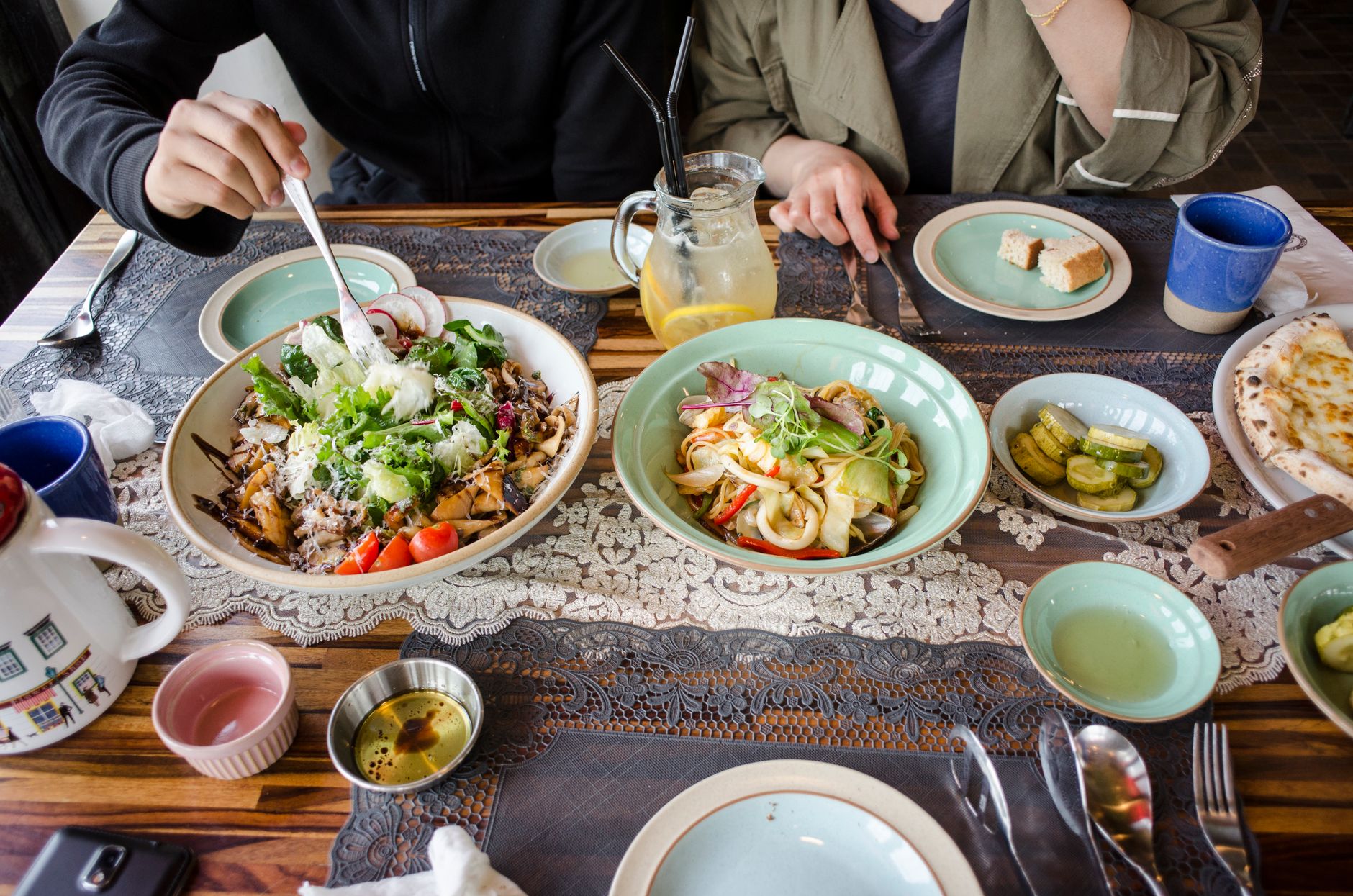 High-angle view of a vibrant meal with fresh salads, drinks, and diverse plating. (Photo: makafood / Pexels)
Search Smarter: How to Actually Find Hidden Gem Restaurants
Tip 3: Sort reviews by "most recent" and prioritize photo reviews. Map apps typically default to sorting by "most relevant" or "top reviews," which tends to surface older or algorithm-favored content. Switch to most recent and focus on visits from the past month or two. Give extra weight to reviews with candid food and interior photos over text-only entries. And here's a red flag worth memorizing: if every photo looks like it came from the same professional shoot — perfect lighting, magazine-style plating, identical angles — you're probably looking at sponsored content, not honest feedback.
Tip 4: Skip "best hidden restaurants near me" and search "[neighborhood] + [specific dish]" instead. Generic searches like "best local restaurants" have long been claimed by marketing agencies, so results are flooded with paid placements. Instead, combine a neighborhood name with an actual dish: "Greenpoint hand-pulled noodles," "East Village tonkatsu," "Silver Lake birria." This surfaces posts from people who genuinely sought out that food, written in plain language without an agenda. Add words like "worth the wait" or "came back again" to your search, and the signal-to-noise ratio improves dramatically. This single habit will uncover more hidden gem restaurants than any listicle ever will.
Tip 5: Cross-reference repeat-visit reviews with older reviews. The most reliable trust signal is consistency over time. A review that says "third visit, still incredible" carries far more weight than ten first-impression raves. Likewise, if reviews from two or three years ago and reviews from last month tell the same story, the kitchen hasn't changed hands and the quality hasn't slipped. Conversely, if positive reviews cluster suspiciously within a single week, you may be looking at the aftermath of a marketing campaign. Genuine praise spreads out naturally across the calendar.
Beat the Wait: Timing and Reservation Tactics
Tip 6: The 2–5 PM lull beats the opening rush. Showing up at opening time sounds clever until you realize everyone else had the same idea — at truly popular spots, a line often forms 30 minutes before the doors open. The smarter play is the mid-afternoon window between lunch and dinner, roughly 2 to 5 PM, when waits at the same restaurant often drop by more than half. If a place serves continuously without an afternoon break, arriving around 2:30 or 3:00 is the golden hour of restaurant hunting. Treat it as a late lunch or early dinner, and you'll eat the same food with none of the stress.
Tip 7: Set cancellation alerts to snag no-show tables. Even fully booked restaurants almost always shed a few reservations in the 24–48 hours before service — plans change, people cancel. On Resy, OpenTable, and similar apps, turn on "notify me" alerts for your target restaurant and time slot, and you'll get a push notification the moment a table opens up. Prime slots like Friday dinner and weekend brunch actually see the most cancellations precisely because they're booked furthest in advance. Don't give up on a "fully booked" listing; set the alert and let the app do the work.
Once You're Inside: Tips Most Diners Never Use
Tip 8: Politely ask about off-menu options. The orders that regulars swear by usually started with one simple question: "Is it possible to get it this way?" Larger portions, spice-level adjustments, half-and-half sides, extra sauce — many kitchens happily accommodate requests that never appear on the menu. The key is timing: ask during a quiet stretch rather than the peak rush, and you'll often get more than a yes — the owner might volunteer their own favorite combination. Build up a few of these small conversations and you'll find yourself getting the regular treatment sooner than you'd expect. This is how hidden gem restaurants stop being hidden — at least to you.
Tip 9: Dining solo? Ask for the bar. When two-tops and four-tops are backed up for an hour, bar and counter seats turn over much faster, and solo diners frequently get seated ahead of larger groups. When you check in, mention upfront that you're happy to sit at the bar — it can slash your wait dramatically. Even couples benefit from keeping the bar option open. In restaurant hunting, seating flexibility is time in your pocket.
Tip 10: Check parking and takeout options before you leave. Small neighborhood spots — the classic profile of hidden gem restaurants — rarely have their own parking, so look up nearby public lots or garages in advance instead of circling the block while your waitlist spot expires. And if the line turns out to be brutal, ask whether they do takeout: many places run to-go orders on a separate, much faster track. Grabbing your food and eating in a nearby park can honestly beat a cramped table after a 90-minute wait.
Build Your Own Map: Recording What You Find
The most painful moment in any food lover's life is thinking, "What was that amazing place we went to last spring?" and coming up blank. Use the save/bookmark feature in your map app to build organized lists — by neighborhood ("Brooklyn," "Portland trip"), by occasion ("date night," "taking the parents"). Over time, opening your own curated list becomes the first move whenever you land in a familiar area.
Take it one step further with a quick note right after each visit. One line is enough: "40-minute wait, food great, probably wouldn't repeat" or "bar seats comfortable, try the braised short rib next time." Recording why you would or wouldn't return prevents you from repeating the same mistakes, and over months, it compounds into a personal database no algorithm can match. Forget star ratings — the single question "Would I go back?" is a far more honest metric.
 Rustic brick alley with a quaint storefront displaying handmade crafts. (Photo: J.Won Lee / Pexels)
Frequently Asked Questions
Q: When is the best time to visit a restaurant with notoriously long waits?
A: On weekdays, the 2–5 PM lull between lunch and dinner is by far the quietest. On weekends, right at opening is your best bet — but since the opening rush is competitive, pair it with a virtual waitlist app. Add yourself to the queue while you're still in transit and time your arrival to the estimate, and your perceived wait shrinks to almost nothing.
Q: How do I tell sponsored reviews apart from genuine ones?
A: Check four things. First, any disclosure of sponsorship or a comped meal. Second, whether the photos look suspiciously professional and uniform — real diners shoot messy, half-eaten plates. Third, whether anyone mentions coming back a second or third time. Fourth, whether review dates are spread naturally over months rather than bunched into one week. A cluster of similar-toned reviews posted within days of each other is the fingerprint of a marketing campaign.
Q: Is it worth hunting for hidden gem restaurants alone?
A: Solo dining is actually an advantage. Target places with bar seating or counter service, and you'll routinely be seated faster than groups. You can also focus entirely on the food, which makes your own judgments sharper. With more restaurants than ever catering thoughtfully to solo diners, eating alone has evolved from an awkward compromise into a genuinely enjoyable hobby.
Final Thoughts
Boiled down, successful restaurant hunting has three phases. Before you go: verify hours and closures, and get on the virtual waitlist early. While you search: use neighborhood-plus-dish keywords and look for repeat-visit reviews. Once you're there: exploit the mid-afternoon lull and stay flexible on seating. Layer in the habit of saving spots to organized map folders with one-line notes, and over time you'll build a failure-proof personal list of hidden gem restaurants that no travel blog can replicate.
None of this requires insider connections or exhaustive research — just small habit changes that save you an hour in line and spare you the disappointment of an overhyped, ad-driven meal. This weekend, pick just two tips from this list and try them. Start with the virtual waitlist and the most-recent review sort; those two alone will noticeably change how your food adventures feel. And when you do stumble onto that perfect little spot no one's talking about yet — save it to your map. That's how every great collection of hidden gem restaurants begins.