Hidden Local Restaurants Only Locals Know About
Discover hidden local restaurants only locals know—no tourist traps. Learn how to find them, reservation tips, and how to visit like a pro.
Hidden Gem Restaurants: How to Find the Local Spots Only Insiders Know
Ever opened a search app on a Saturday evening just to pick a date-night spot, then closed it an hour later completely worn out? The places at the top of the results all have a one-hour wait, the photos look gorgeous, and yet the reviews are full of "honestly, the food was just okay." That fatigue is real in 2026, and it's pushing more and more people to change direction. Instead of chasing the most photogenic table, they're heading down the side streets to find somewhere that's genuinely delicious and actually comfortable to sit in.
So today, let's talk about hidden gem restaurants — not the famous chains everyone already knows, but the quiet neighborhood spots the locals keep to themselves. We'll cover exactly how to find them and how to visit without ever striking out. If you'd rather have local character than a tourist trap, and privacy over a queue, read all the way to the end.
The core idea is simple: great restaurants aren't the ones an algorithm shoves at you. They're the ones you filter out with legwork and a trained eye. Let's build that eye, one skill at a time.
Why Hidden Gem Restaurants Are Having a Moment
A few years back, the formula was straightforward: "great restaurant = crowded restaurant." But the mood has shifted. The long lines out front, the cramped seating designed purely for fast turnover, the food that never quite lives up to the hype — all of that has piled up into a collective "is it really worth all this?" And the backlash keeps growing.
A broader shift toward local spending is fueling it, too. People care about supporting neighborhood businesses, and even when they travel, they want the places locals actually eat rather than the ones built for tourists. Because social media algorithms keep recommending the same predictable, over-hyped spots, more and more people have discovered the genuine thrill of hunting for the real thing just outside that feed.
Above all, hidden gem restaurants let you catch three birds with one stone: reasonable value for money, a private atmosphere where you can actually hear each other talk, and the quiet satisfaction of "I found this place." That's a signal that this isn't a passing fad — it's a real change in what people want out of a meal.
 Rustic brick alley with a quaint storefront displaying handmade crafts. (Photo: J.Won Lee / Pexels)
5 Ways to Actually Find Hidden Gem Restaurants
Now for the practical part. This isn't about going on gut feeling — it's about filtering with data.
First, read map reviews with a filter on. Don't just glance at the star rating. Scan the actual review text for words like "neighborhood," "regular," "local," or "been coming here for years." When those phrases show up often, there's a good chance it's a place locals return to consistently. On the flip side, if the reviews are all about "the perfect photo" and "the vibes," you may be looking at an atmosphere-first spot where the food takes a back seat.
Second, pay attention to reorder rates and repeat-customer signals on delivery apps. Many apps surface indicators like "lots of regulars order here," and that's a far more honest signal than any one-off marketing push. If people keep ordering again, the food has been vetted — plain and simple.
Third, dig through local community forums instead of Instagram location tags. Neighborhood apps, local parenting groups, community subreddits, and city-specific Facebook groups are where you'll find raw, unsponsored reviews. Because it's information locals trade among themselves, the trust level is a different animal entirely. Search something like "best restaurants in [neighborhood]" and read what real residents say to each other.
Fourth, observe who's eating lunch there. If nearby office workers and older regulars drift in and out naturally on a weekday afternoon, the odds are high the kitchen knows what it's doing. If the only faces you see are tourists dragging suitcases, give it a second look before committing.
Fifth, count the menu items. A place that focuses on a handful of dishes is often a stronger local player than one with an overwhelmingly long menu. Cross-check just these five signals and your odds of striking out drop dramatically. Finding hidden gem restaurants stops being luck and starts being a repeatable process.
Types of Hidden Gem Restaurants to Choose From
Hidden gems come in flavors, too. Pick the one that fits your mood and the occasion.
Old-school family diners tucked down side streets are local legends proven by time. The signage is faded and the interior is humble, but there's a reason they've held the same corner for decades. They shine when you need a good-value meal, a solo lunch, or something filling and dependable to power through the afternoon.
Small chef-driven restaurants and reservation-only dining rooms in residential areas are perfect for a date or a special gathering. Rather than sitting on a busy main road, they set up in quiet back streets, where the chef often sources ingredients personally and seats only a few tables. They're rarely crowded, which makes them ideal for conversation — and a great pick for a work dinner where you actually want some privacy.
Made-to-order stalls inside traditional markets and local brunch cafés bring energy and fun in equal measure. A noodle stall in the corner of an old market, a tempura counter, or a stylish brunch café that just opened near the market entrance — these give you a liveliness you'll never feel at a tourist-district franchise. They also slot beautifully into a weekend outing.
Booking and Timing Tricks for a No-Fail Visit
Nothing stings more than tracking down a great spot only to arrive at a locked door. A few simple habits will cut your failures way down.
Always check for mid-afternoon closures and "sold out for the day" cutoffs. The more local a place is, the more likely it closes early once the day's ingredients run out, or takes a long break between lunch and dinner. Double-check the hours before you go, and hit the popular dishes early to be safe.
Use waitlist apps or just call ahead. These days even small spots take reservations through apps or over the phone. Reservation-only dining rooms in particular often won't seat walk-ins at all, so confirming in advance is essential.
If you're dining solo or in a small group, target off-peak windows. Right at opening or around 2 p.m., after the lunch rush fades, are lovely times to enjoy the place at a relaxed pace. When you book, ask ahead for a window seat or a quiet corner and your satisfaction jumps. When it comes to hidden gem restaurants, nailing the timing alone can make the very same place feel like a completely different experience.
How to Turn Your Finds Into a Personal List
Once you've found a great spot, it's a waste to go once and forget it. Build it into an asset that's yours.
Lean hard on map favorites and star-rating notes. Drop a star on your map app of choice and jot practical notes in the memo field — "the [dish] is a must, expect a wait, no parking" — and you've built your own personal restaurant map. Next time you're passing through the area, you can pull it right up.
Sort by category and your list becomes far more useful. Group them by situation and company — "solo dining," "date night," "bringing the parents," "works for a team dinner" — and the time you spend agonizing over where to go shrinks dramatically. Marking each one as high/medium/low for "would I go back" makes the whole thing easy to manage.
Share with manners. If a beloved local spot suddenly becomes a wait-in-line hotspot overnight, you end up unable to get in yourself and the regulars get squeezed out too. For a small place, quietly recommending it to the people you truly care about beats scattering location tags everywhere — and it's better for everyone involved.
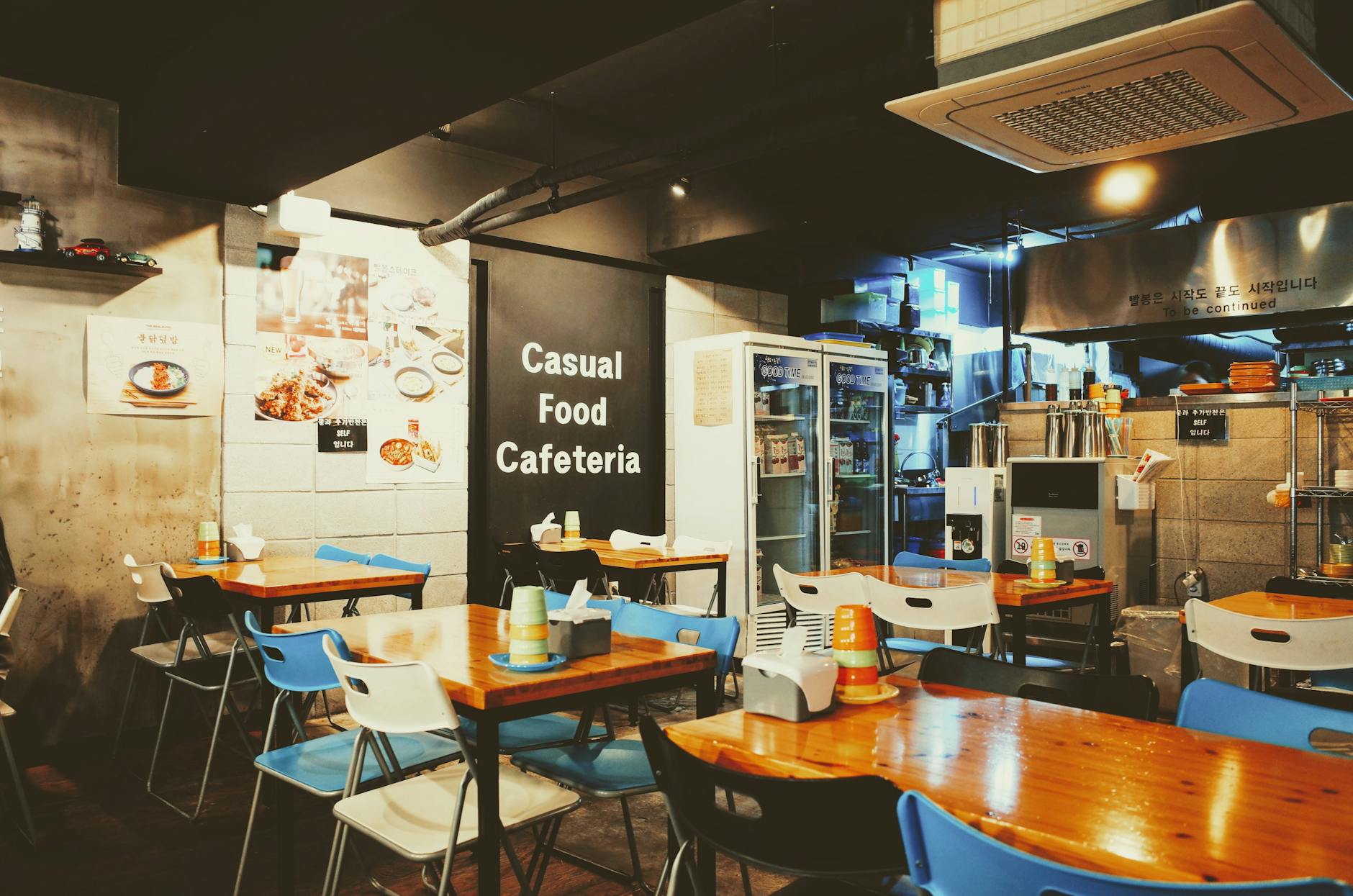 A cozy casual cafeteria interior with tables and chairs. (Photo: vedanti / Pexels)
Frequently Asked Questions (FAQ)
Q: Which app is most accurate for finding hidden gem restaurants? Rather than trusting a single app, I recommend cross-checking. Look at the texture of the reviews on your main map app (mentions of regulars, repeat-visit language), find local resident reviews in a neighborhood or community forum, then gauge quality through a delivery app's reorder rate or repeat-customer signals. When all three sources point to the same positive verdict, your odds of striking out are low.
Q: Can I trust a restaurant that has very few reviews? The quality of the content matters more than the sheer number of reviews. Even if a place has only ten reviews, if some of them say things like "I've been a regular for years" or "everyone who lives in this neighborhood knows this spot," it's actually quite trustworthy. Conversely, if a place has tons of reviews but they're all promotional posts clustered right after opening, take a closer look before you go.
Q: How can I tell if a spot is truly locals-only and not full of tourists? Check three things: whether the weekday lunch crowd is mostly nearby workers and residents, whether the menu is written primarily in the local language without tourist-oriented translations everywhere, and whether it's tucked into a side street or residential block rather than sitting on a main road. When all three overlap, there's a strong chance it's a local-only spot.
Q: Is it okay to share hidden gem restaurants on social media? It's worth weighing the size of the place and the situation. If a small restaurant gets slammed with a wait it can't handle, both the food quality and the regulars' satisfaction can suffer. If you do share, favor introducing the atmosphere over dropping precise location tags, or simply tell the people close to you — that's the courteous move.
Wrapping Up
To sum it up: finding hidden gem restaurants is no longer about luck — it's an era of finding them with a trained eye. Just by reading the texture of reviews, tapping into local communities, and observing who eats lunch there, you can sidestep the trap of the predictable, over-hyped spot. Add in a little attention to closing times and booking windows, and wasted trips disappear.
Pick just one of the methods we covered today and try it the next time you're choosing where to meet. Keep stacking the places you discover onto your own personal map, and before long you'll be the one people turn to with "hey, you know the good spots around there, right?" While everyone else stands in line, the real local list — the one only insiders quietly enjoy — is yours to start building right now.