
Hidden Local Restaurants: How to Find Gems Locals Love
Discover hidden local restaurants that never trend on social media. Learn insider tips to find real gems, skip the wait, and eat where locals go.
How to Find Hidden Gem Restaurants Nobody Talks About (And Skip the Crowds)
It's Saturday night, you type "best restaurants near me" into the search bar, and your heart sinks a little. The screen fills with the same glossy food photos, the same five-star averages, the same suspiciously polished reviews. Every neighborhood seems to serve up identical interiors and copy-paste captions. And half the time, when you actually walk through the door, the meal never quite lives up to the hype.
That growing fatigue is exactly why savvy diners are circling back to something older and quieter: the hidden gem restaurants that never needed a marketing budget to fill their seats. These are the places locals quietly guard — the ones regulars keep coming back to on word of mouth alone. As sponsored reviews and paid "authentic" recommendations pile up, more people are hunting for the real thing instead of the loudest thing.
In this guide, I'll walk you through how to filter out the advertising noise and find restaurants that actually deserve your money — plus five field-tested tactics for uncovering local spots that never show up on your feed. Ready to start building your own list of places only you know about? Let's dig in.
Why Hidden Gem Restaurants Are Having a Moment
A huge slice of the restaurant "recommendations" you see on search engines and social platforms is quietly shaped by sponsorships and viral marketing campaigns. The complaint that many top-ranking review posts are actually paid placements isn't new — it's been repeated for years. The tell is usually in the details: the photos are over-edited, the visits all cluster around a single promotional window, and the writing is a little too smooth to be real.
Here's the paradox worth internalizing: the genuinely great restaurants are often the ones that neglect marketing entirely. A place that's already booked solid with regulars has no reason to buy ads. An owner who doesn't even have a social media account, or who's been using the same laminated menu for a decade, is often sending you a more trustworthy signal than any influencer ever could.
Against that backdrop, interest in terms like "hidden gem restaurants" and "local favorites" keeps climbing. There's simply more satisfaction in discovering a great meal yourself than in eating somewhere everyone already knows about. The standard we judge food by is shifting — from "is it famous?" to "is it real?"
 Rustic brick alley with a quaint storefront displaying handmade crafts. (Photo: J.Won Lee / Pexels)
How to Spot a Genuine Hidden Gem
The first indicator that separates the real from the manufactured is repeat visits and the local-to-tourist ratio. When you skim the reviews, look for phrases like "back again for the third time" or "I live nearby and eat here constantly." Repetition of that kind is a strong trust signal. If, on the other hand, most reviews come from people who traveled in once, snapped a dozen photos, and left, you have reason to suspect a viral marketing push rather than lasting quality.
The second indicator is a short menu. When a place offers only three or four dishes, it usually means the kitchen is focused on doing a few things exceptionally well. A sprawling menu that tries to be a diner, a bistro, and a taco stand all at once often has no clear specialty. It's not an ironclad rule — there are always exceptions — but as a quick heuristic, it holds up.
The third indicator has nothing to do with the number of reviews and everything to do with their texture. Hundreds of five-star ratings that all say roughly the same thing should actually raise your suspicion. But a restaurant with only 30 or 40 reviews that read like real, specific experiences — "the braised fish was seasoned perfectly," "the owner refills the side dishes without you even asking" — is far more likely to be a true hidden gem. Specificity and variety are the fingerprints of honest feedback.
5 Tactics for Finding Local Spots That Never Trend Online
First, cross-check three different map and review platforms. Google Maps, Yelp, and TripAdvisor each attract slightly different crowds. Yelp skews toward committed local reviewers, Google Maps captures a broad mix, and TripAdvisor leans heavily toward travelers. When a place earns strong marks across all three, you're looking at genuine satisfaction rather than a coordinated ad campaign.
Second, lean on neighborhood communities. Apps like Nextdoor, local subreddits, and community Facebook groups are full of "this place is genuinely amazing" posts written with zero commercial motive. Few signals are as reliable as a recommendation from a neighbor who has nothing to gain.
Third, ask the locals directly. Rideshare and taxi drivers, corner-store owners, the stylist at the barbershop that's been there for twenty years — these people know exactly where their neighborhood actually eats. A single question like "where do you and the other shop owners go for a good, cheap lunch around here?" beats a hundred web searches.
Fourth, aim for markets and back streets. Prime corners on the main drag tend to be occupied by high-turnover spots paying premium rent. The deeper you go — into food halls, market stalls, and tucked-away alleys — the more likely you are to find an old-school kitchen that has survived on taste alone.
Fifth, don't be scared of the place with no sign. A faded, weather-beaten storefront, or a spot that only takes cash, can be the strongest survivor of all — a kitchen that stayed in business for decades because the food was worth it.
Finding Hidden Gems While Traveling — A No-Fail Strategy
The first principle for uncovering hidden gem restaurants in an unfamiliar city is to escape the tourist radius. Anything within a five-to-ten-minute walk of a major attraction is usually built to catch one-time visitors. On a map app, target spots that are at least a 15-minute walk away, or one or two transit stops out — that's where the neighborhood's real dining scene lives.
The second principle is to read the "most popular" ranking on local delivery apps. Sort by popularity on whatever food-delivery service dominates the region — DoorDash, Uber Eats, or a local equivalent — and you'll see what actual residents order most, not what tourists photograph. Delivery reviews tend to carry far less sponsorship, which makes them a reliable read on local taste.
The third principle is to check for lunch specials and set operating hours. A place that offers a cheap weekday lunch set, or that clearly closes for a break in the afternoon, is usually serving nearby workers and residents — a true neighborhood restaurant. Conversely, a spot that runs nonstop from breakfast until late at night is more likely to be chasing tourist traffic. Cross-reference just those three signals and you'll slash your odds of a bad meal in a city you don't know.
Beating the Line & Dining With Good Manners
Even a hard-won hidden gem loses its shine if the wait crushes you. The most reliable strategy is simply to avoid peak hours. Lunch tends to spike from noon to 1 p.m., and dinner from roughly 6:30 to 8 p.m. Shift just a little earlier or later — a 1:30 lunch, a 5:30 dinner — and you'll often walk right in. By day of the week, Mondays and Tuesdays are typically the calmest.
Use waitlist and reservation apps, too. Services like OpenTable, Resy, and Yelp's waitlist let you join the queue remotely, so you can wander the neighborhood and show up when your turn comes around. If a place takes reservations at all, booking ahead is the easiest move of all.
Finally, mind your manners. Hidden gems often have few seats and a single owner running the whole show. When there's a line, don't linger long after you've finished eating. Don't turn the meal into a photo shoot that disrupts other diners or the kitchen. And if it was truly great, come back quietly and keep supporting them. That kind of consideration is exactly what keeps hidden gem restaurants alive for the long haul.
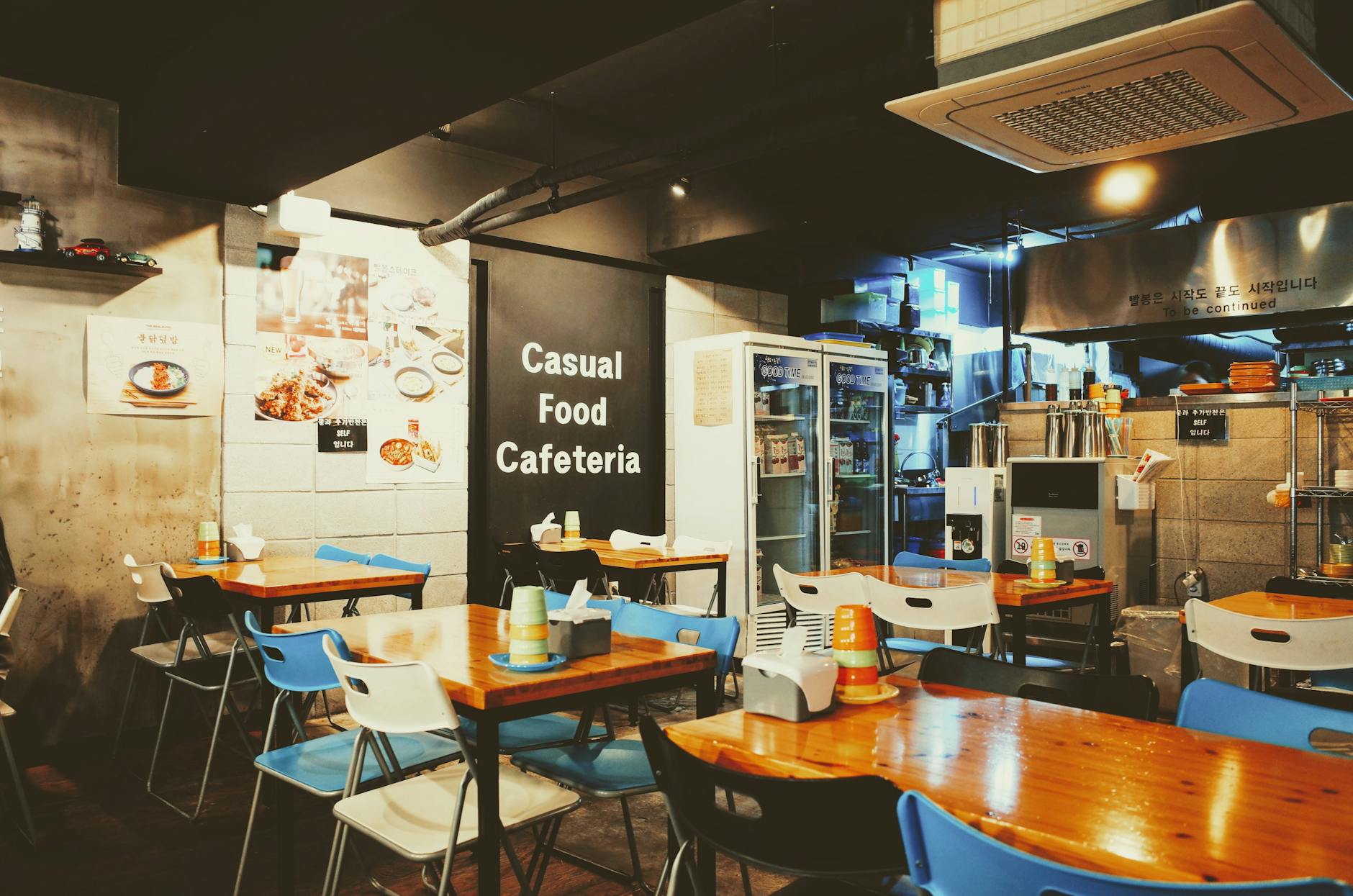 A cozy, casual eatery interior with simple tables and chairs. (Photo: vedanti / Pexels)
Frequently Asked Questions (FAQ)
Q: How do I tell a hidden gem from a place that's just unknown? It comes down to trust signals. First, check for a high share of returning regulars — look for the "came back again" type of comment in the reviews. Second, see whether local reviews get specific: if people describe the seasoning, the side dishes, and how the owner treats guests in real detail, it's likely genuine. Third, consider longevity — a spot that's held the same location for years is, in itself, evidence of proven quality. If none of those are present and the place is simply empty, it's still closer to "undiscovered" than "hidden gem."
Q: What's the fastest way to find a local spot when I'm traveling and short on time? Compress it into three steps. (1) Open a local delivery app and check the top of the "most popular" ranking for that area — local taste shows up immediately there. (2) Cross-check your candidates on Google Maps and Yelp, and pick the ones that score well on both. (3) Confirm the place sits outside the main tourist radius. Those three steps get you to a no-fail choice in under ten minutes.
Q: How can I tell whether a restaurant review is sponsored? Paid reviews share common tells. (1) The same or very similar phrasing repeats across multiple posts. (2) The photos are heavily edited, with near-identical angles and composition. (3) The visits all cluster in one window, like right after opening. (4) There's nothing but effusive praise and zero mention of any downside. If two or three of those overlap, treat it as likely promotional, and lean on specific reviews spread across different dates instead.
Final Thoughts
To sum it up, finding great hidden gem restaurants really comes down to three things: an eye for filtering out sponsored signals, the habit of cross-referencing map apps, delivery rankings, and neighborhood communities, and the strategy of stepping outside the tourist radius to reach where locals actually eat. Layer in the off-peak timing tactics and the good manners that keep small kitchens thriving, and you no longer have to be pushed around by the same obvious, over-advertised spots everyone already knows.
Pick just one tactic from this guide and try it on your next meal out or your next trip. The person who was worn down by a search bar full of ads slowly becomes the one quietly stacking up "places only I know about" — a real diner with a real list. And when you do uncover a hidden gem of your own, treat it kindly, keep it close, and enjoy it for a long time to come.