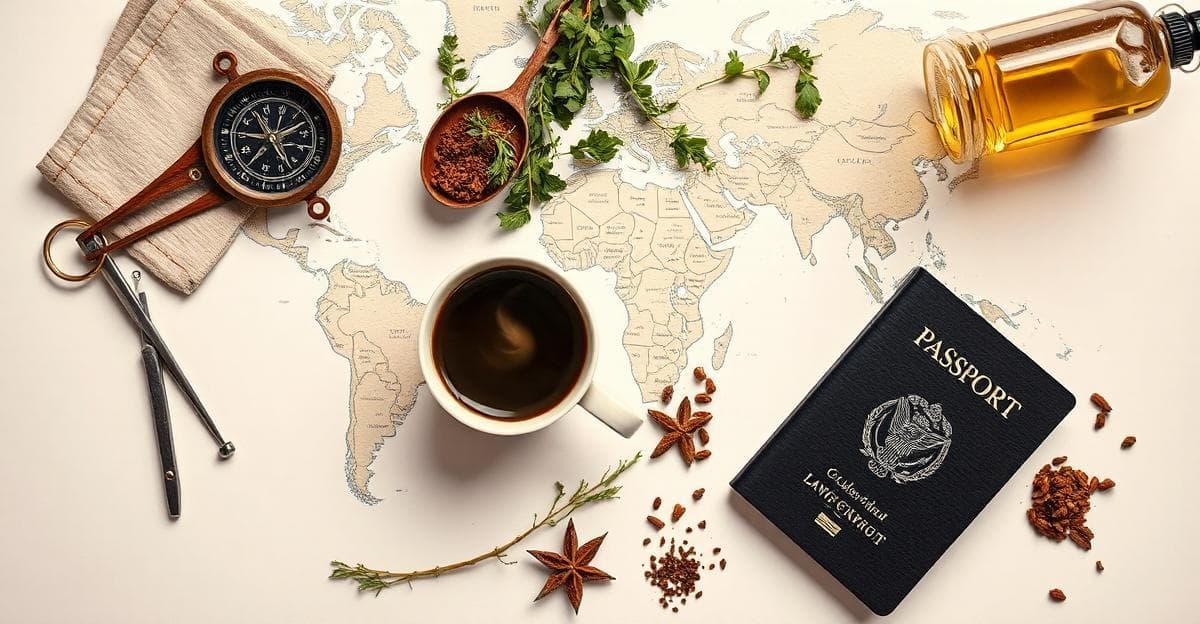
Food Tourism Trend: Why Everyone's Traveling for Taste
Discover why the food tourism trend is booming—top destinations, budgeting tips, and how to find must-try local eats for your next culinary trip.
Why Everyone Is Traveling for Food: The Food Tourism Trend Explained
Have you ever picked a travel destination by searching "what should I eat there?" before anything else? If so, you're already part of a movement reshaping how people travel. As of mid-2026, travelers' priorities have shifted in a visible way: instead of racing through famous landmarks for photos, more and more people are planning entire trips around a single unforgettable meal.
This is the food tourism trend — a style of travel where cuisine, not sightseeing, sits at the center of the itinerary. Scroll through Instagram or YouTube and you'll see it everywhere: travel vlogs built around hole-in-the-wall restaurants, bustling local markets, and decades-old family eateries. What used to be a niche interest has become a full-blown lifestyle.
In this guide, we'll break down what food tourism actually means, why so many travelers are chasing flavors instead of landmarks, which destinations deserve a spot on your list, and how to plan a culinary trip that doesn't disappoint. If you love travel and food in equal measure, keep reading.
What Is Food Tourism? (And How It Differs from Just Eating Out on Vacation)
Food tourism — sometimes called gastronomy tourism or culinary travel — means traveling with food as the primary purpose of the trip, not an afterthought. It's fundamentally different from stopping at a well-reviewed restaurant near your hotel. In food tourism, what you eat forms the backbone of the itinerary, and where you go follows from that.
Here's the distinction: a typical restaurant crawl is about visiting highly rated places. Food tourism goes deeper — it's about experiencing where ingredients come from, why a dish is tied to a particular season, and the story behind who makes it. Think of wandering a dawn fish market in a coastal town and eating fish that came off the boat that morning, or visiting a small regional brewery and tasting spirits made the way they've been made for generations. That's a meal that becomes a memory, not just a stop on a checklist.
 Enjoy a hearty breakfast with scrambled eggs, sausages, salad, and iced coffee in South Korea. (Photo: Viridiana Rivera / Pexels)
This approach — experiencing local ingredients, seasonality, and culture through food — has taken root worldwide as gastronomy tourism. And it makes intuitive sense: for most of us, the most vivid memory of any place is ultimately a taste. That's exactly why the food tourism trend has such staying power.
Why the Food Tourism Trend Is Exploding Right Now
So what's driving millions of travelers to build trips around their taste buds? Several forces are converging at once.
Social media turned food into destination content. Mukbang videos, food vlogs, and travel reels have made regional dishes visible to a global audience. Once you've watched someone slurp a bowl of hand-pulled noodles in a back-alley shop, you don't just want to see the city — you want to taste that exact bowl. This "experience economy" mindset means travelers increasingly seek meals they can't replicate at home, rather than following someone else's itinerary point by point.
Experiences beat possessions. Consumer values have shifted toward spending on memorable moments over material goods. A remarkable meal — even an expensive one — delivers a kind of satisfaction that a luxury purchase often doesn't. This is why food budgets now take up a bigger slice of overall travel spending: travelers see a special dinner not as an expense, but as the whole point of the trip.
Local and authentic is the new premium. Decades-old family-run restaurants, regional specialty ingredients, and hidden gems championed by local creators are getting a fresh spotlight. Travelers have grown tired of tourist-strip chains and are actively seeking food they can only find in that one neighborhood, made by people with deep roots there. Authenticity has become the currency of the food tourism trend.
Solo travel and solo dining went mainstream. Eating alone and traveling alone no longer carry any stigma. That's removed a huge barrier: you don't need to coordinate schedules with anyone to chase a great meal. The rise of counter seating, chef's bars, and solo-friendly tables has made it easier than ever to plan a culinary trip for one.
Best Food Tourism Destinations in South Korea
South Korea has quietly become one of the world's most exciting culinary travel destinations, and it's a perfect case study in how the food tourism trend plays out regionally. Here are the standouts:
- Jeonju — Often called the food capital of Korea, Jeonju is the home of bibimbap, elaborate multi-course hanjeongsik dining, kongnamul gukbap (bean sprout soup with rice), and entire alleys dedicated to makgeolli (traditional rice wine). Strolling the Hanok Village between meals makes it a great year-round destination.
- Tongyeong & Yeosu — These southern coastal cities are seafood heaven. Tongyeong is famous for its oysters; Yeosu for its mustard-leaf kimchi and seafood set meals, plus lively market street food. Oysters and most shellfish peak in the cooler months, so late fall through winter is prime time.
- Jeju Island — Black pork barbecue, ultra-fresh seafood harvested by the island's legendary haenyeo free-divers, and a thriving café scene. On Jeju, the ingredients themselves are reason enough to visit.
- Gangneung & Sokcho — Fresh sashimi, mulhoe (chilled spicy raw fish soup), and a famous coffee street along the east coast. Mulhoe is a summer dish through and through — icy, tangy, and perfect in the heat.
Notice the pattern: each region has signature dishes tied to specific seasons. Timing your trip around peak ingredients — rather than around holidays or weather alone — is one of the simplest ways to elevate a food-focused trip.
Top International Food Tourism Cities and Their Signature Dishes
Ready to go farther afield? These destinations consistently rank among the world's best for culinary travelers:
- Japan (Osaka & Fukuoka) — Osaka proudly calls itself "the nation's kitchen," famous for takoyaki and okonomiyaki eaten hot off street-side griddles. Fukuoka offers rich tonkotsu ramen and a vibrant izakaya culture centered on its open-air yatai food stalls. Both cities reward wanderers who eat where locals eat.
- Vietnam & Thailand — Southeast Asia is the world capital of high-value street food. Pho, banh mi, pad thai, and endless night-market discoveries deliver enormous satisfaction at remarkably low prices — ideal if you want maximum culinary variety per dollar.
- Italy & Spain — For depth rather than breadth: Michelin-starred dining, winery tours, and Spain's tapas culture, where an evening becomes a slow crawl through small plates. Italy remains the pilgrimage site for pasta and pizza, but its real treasure is the way every small town guards its own regional recipes.
When planning an international culinary trip, check flight prices, exchange rates, visa requirements, and local costs early. Prices swing dramatically between peak and off-peak seasons, so flexible dates can stretch your food budget considerably.
How to Plan a Food Trip That Doesn't Disappoint (Budget, Research, Logistics)
A great culinary trip rarely happens by accident. Here's a practical playbook:
First, budget around your meals — not the other way around. Food will be a bigger share of your spending than on a typical trip, so decide your total food budget up front. Then divide your meals into two tiers: one or two "destination meals" worth splurging on, and lighter meals in between at markets or casual local spots. Investing boldly in a few unforgettable meals while keeping the rest simple is the most satisfying way to spend.
Second, find where locals actually eat. To avoid tourist traps, lean on region-specific review apps with heavy local usership and social accounts run by local food creators rather than global aggregators. As a rule of thumb, the best food hides one street back from the main tourist drag — in narrow alleys, inside traditional markets, and at old establishments that never bothered with an English sign.
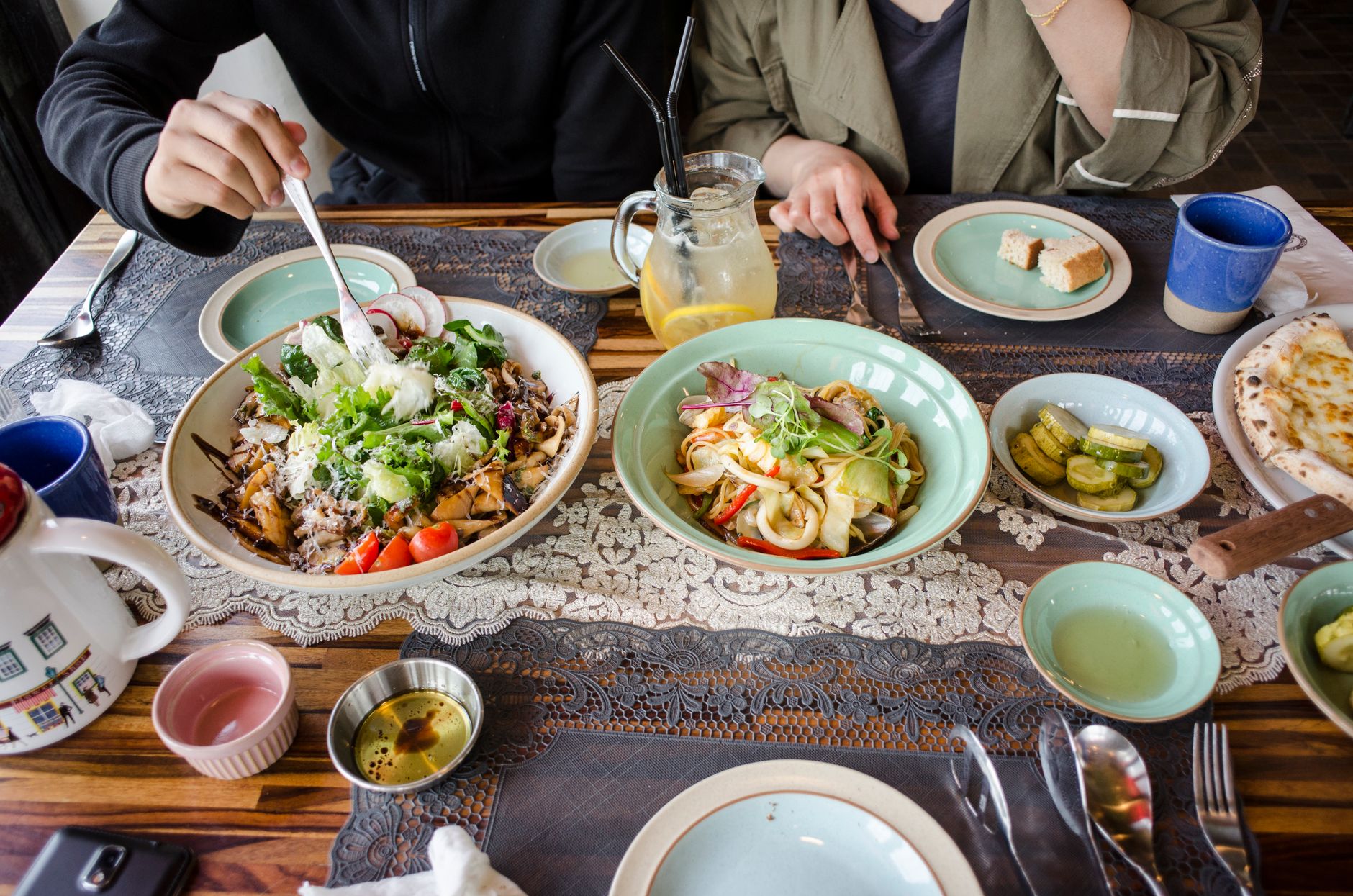 High-angle view of a vibrant meal with fresh salads, drinks, and diverse plating. (Photo: makafood / Pexels)
Third, confirm reservations, hours, and closing days. Popular restaurants often require booking well in advance, and small family-run spots frequently close early once the day's ingredients run out. Always check opening hours, mid-afternoon break times, and weekly closing days before you go — nothing deflates a food trip like arriving at a locked door.
Fourth, map your route around your stomach. If you're planning two or three significant meals a day, pin every restaurant on a map beforehand and cluster them geographically. Trekking across a city on a full stomach wastes both time and appetite. Build walking routes between meals — a stroll through a park or old neighborhood doubles as digestion time and sightseeing.
Frequently Asked Questions
Q: Is food tourism good for solo travelers? Absolutely — in many ways it's better solo. You set the pace, eat exactly what you want, and never have to compromise on a restaurant choice. With solo dining now completely normalized, counter seats and bar seating are widespread. Skip the elaborate multi-course restaurants that cater to groups and build your route around noodle shops, market stalls, and casual eateries where a party of one fits right in.
Q: How much should I budget for a food-focused trip? For a domestic trip in a mid-cost country like South Korea, many travelers budget roughly $40–80 USD per day for food, more if a special tasting-menu meal is on the agenda. Internationally, costs vary enormously by destination, but planning for food to consume 30–40% of your total trip budget is a comfortable rule of thumb. Treat these as starting points and adjust for your destination and appetite.
Q: How do I find genuine local restaurants instead of tourist traps? Use review platforms popular with locals in that specific country, and follow local food creators on social media rather than relying only on international travel sites. Physically, look past the main boulevards: long-running establishments tucked into alleys and stalls deep inside traditional markets are where you'll find the places locals have returned to for decades.
Q: Is there a best season for food tourism? Let seasonal ingredients decide. Oysters and most shellfish are best in the cold months; chilled dishes like Korea's mulhoe belong to summer; harvest festivals cluster in autumn. Choose the dish you're craving first, find its peak season, and then pick the destination and dates to match. It's the single most reliable way to avoid disappointment.
Final Thoughts: Let Your Next Trip Start with a Meal
Food tourism isn't just about eating well on vacation — it's about experiencing a region's culture, seasons, and stories through what's on the plate. The forces behind the food tourism trend — social media's food obsession, the shift toward experiential spending, the renewed love for authentic local businesses, and the normalization of solo travel — show no signs of slowing down. If anything, culinary travel is becoming the default way a new generation explores the world.
Whether it's bibimbap in Jeonju, oysters in Tongyeong, ramen in Fukuoka, or tapas in a Spanish alley, the formula is the same: plan around your budget, your route, and the season's best ingredients, and it's hard to go wrong. So for your next trip, try flipping the usual order — don't start with a landmark. Start with the one meal you can't stop thinking about, and build everything else around it. Your personal map of flavors is waiting to be filled in.