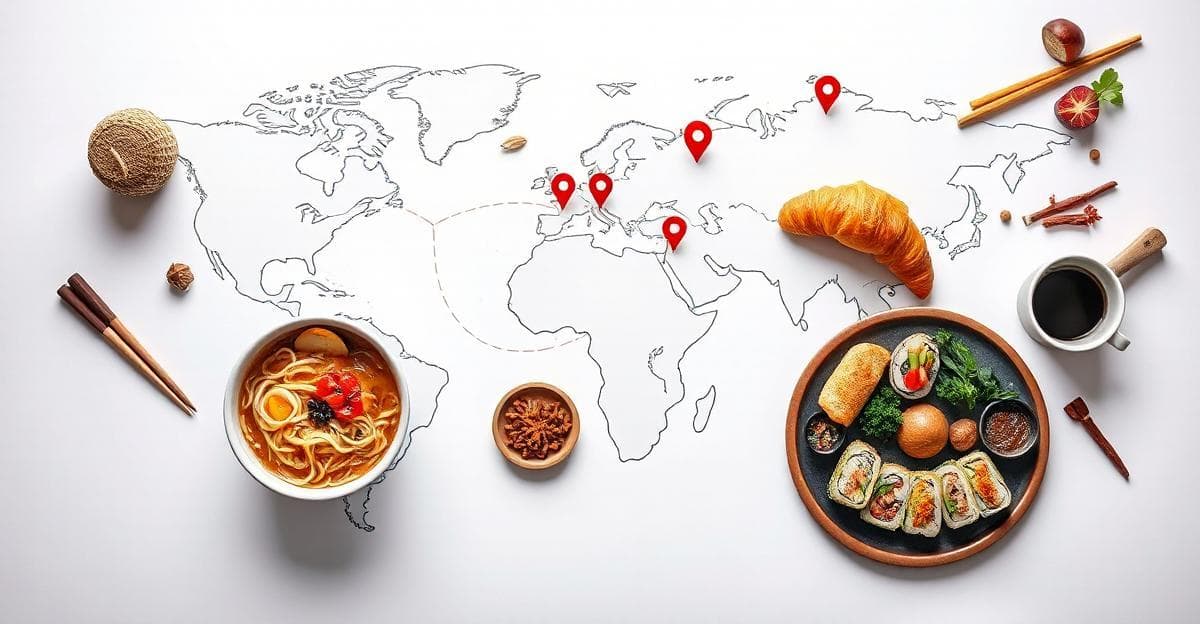
Culinary Travel Destinations: A Complete Foodie Guide
Discover the best culinary travel destinations worldwide. Find local eats, plan your budget, and taste seasonal dishes on your next foodie adventure.
Culinary Travel Destinations: Your Complete Guide to Mapping the World One Bite at a Time
Some travelers open a map before a trip; others open a restaurant list. If the first thing you search when planning a getaway isn't "top sights" but "where do the locals eat," then this guide is for you. I'm the same way. Standing in front of a famous landmark for a photo has never stuck with me the way sitting in a cramped, decades-old noodle shop and eating exactly what the neighborhood eats does. That's the kind of trip we're talking about today: a journey built entirely around flavor, and the best culinary travel destinations to build it around.
As of 2026, the travel conversation has clearly shifted toward depth of experience over box-ticking. With borders long reopened and budgets still tight in many places, people are increasingly choosing trips that leave a mark on the palate rather than just the camera roll. Among travelers in their twenties through forties especially, flying somewhere purely to eat has quietly become a lifestyle rather than a novelty.
In this guide, we'll cover why food-first travel feels so different, how to choose the right city, how to dodge tourist traps and find where locals actually eat, and how to plan an itinerary and budget that won't leave you overstuffed or overspent. Grab a coffee, and let's unfold a world map drawn in flavor.
What Is Culinary Travel? Why Choose "Taste" Over "Sightseeing"
Where ordinary tourism starts with "what do I want to see," culinary travel starts—and ends—with "what do I want to eat." You don't fly to Paris to see the Eiffel Tower; you fly to Paris for the still-warm croissant from a neighborhood boulangerie and a wedge of cheese pulled from a market stall. The entire logic of picking a destination flips on its head.
Food is a compressed language for a region's history, climate, and culture. Follow the thread of why southern Italy runs on tomatoes and olive oil, or why a single Thai dish balances sour, sweet, and fiery all at once, and you'll trace trade routes, colonial history, and seasonal harvests without ever opening a textbook. Every plate is essentially one chapter of a history book, which is exactly what makes it so satisfying to learn.
This movement now goes by the name "gastronomy tourism," and international tourism bodies increasingly treat it as a pillar of sustainable travel. The interest is real and growing: where the old goal was collecting stamps at famous landmarks, a new kind of practical food lover now boards a plane for a single dish they can only eat in one place on earth.
 Close-up of a vibrant Monstera leaf in a pot indoors in Đồng Nai, Vietnam, emphasizing lush greenery. (Photo: Vui Nguyen / Pexels)
A Map of the World's Must-Visit Culinary Travel Destinations
Start with Asia. Cities like Tokyo, Taipei, and Bangkok deliver an unbeatable ratio of flavor to cost. Tokyo has long held one of the highest concentrations of Michelin stars of any city on earth, with staggering depth across ramen, sushi, and izakaya culture. In Taipei, a single loop through a night market fills you up on oyster omelets, beef noodle soup, and pineapple cakes. Bangkok stretches from street-cart pad thai to Michelin-recognized street food, making it an especially forgiving entry point for first-timers.
Cross into Europe and the character changes entirely. San Sebastián in Spain is widely considered one of the greatest food shrines on the planet, with one of the highest Michelin densities per capita anywhere; its signature ritual is the "pintxo crawl," hopping bar to bar and grazing on one or two small plates at each. Bologna, home of ragù, mortadella, and Parmigiano, has earned the nickname "the stomach of Italy," while Lyon in France is the beating heart of traditional bouchons and the slow-food philosophy.
The trick to choosing among these culinary travel destinations is to lock in "the one dish you can only eat here" in advance. Basque cheesecake in San Sebastián, real ragù over tagliatelle in Bologna, beef noodle soup in Taipei, dawn sushi in Tokyo. Pin each city's signature to the map, and your travel route becomes a food map all on its own.
How to Find Where Locals Actually Eat—and Dodge the Tourist Traps
The foundation of vetting any restaurant is cross-referencing. Don't trust a single Google Maps rating. Check local review platforms (Tabelog in Japan, Dianping in Greater China, and their equivalents elsewhere) alongside local delivery-app ratings. When a place scores high across all three channels, your odds of a miss drop dramatically. And the higher the share of native-language reviews, the more likely it's a spot locals genuinely rely on.
Learn to tell "the place locals line up for" from "the place that only appears on foreign travel blogs." If every review is in the same foreign language, if the menu is plastered with photos aimed at tourists, and if it occupies prime real estate in the dead center of a tourist zone, be a little skeptical. Conversely, if most guests are locals, the menu centers on regional home cooking, and it sits one block off the main drag down a side street, the odds it's the real thing go way up.
Balance is everything in your route. Mix traditional markets (raw, unfiltered local life), tucked-away neighborhood eateries (great-value local dining), and Michelin Bib Gourmand spots (vetted, reasonably priced excellence) into a single day, and you'll sweep the full spectrum of a city's food scene. Market for breakfast, Bib Gourmand for lunch, an old-school hole-in-the-wall for dinner—that's the rhythm I'd recommend.
Planning a Foolproof Food Itinerary and Managing Your Budget
The biggest ambush of food travel is, surprisingly, stomach capacity. Fill all three daily meals with fine dining and by day three you won't be able to eat anything. The fix is pacing: designate one "main meal" per day and keep the rest light. Factor in snacks and market nibbling, and always leave one meal slot completely empty on purpose.
Fine-dining reservations are a race against the clock. Popular restaurants often sell out the moment booking windows open, typically one to three months before your visit, so set an alarm for the exact open date and time. Use the restaurant's dedicated reservation app or official site, and once you're confirmed, add it to your calendar to guard against a no-show. A no-show doesn't just waste your seat—it takes a spot from the next traveler and can hurt your standing for future bookings.
Budgeting is easiest when you split it into tiers. Roughly speaking, a value day might run $40–60, a mid-range day $70–150, and a day with an omakase or fine-dining reservation $180 and up (this shifts with the city and exchange rates). Keep breakfast light and cheap with a market or bakery run, then pour the budget into one standout dinner. That "choose and concentrate" strategy lifts satisfaction more than spreading spend evenly ever will.
Preparation and Etiquette to Enjoy Culinary Travel to the Fullest
The single most practical thing to pack is language. Learn a handful of essential food phrases in the local tongue (recommendation, less spicy, the check) and, if you have allergies, make an allergy card written in that language ahead of time. For potentially life-threatening items like shellfish, nuts, or gluten, a printed paper card is safer than trusting a translation app in the moment.
Etiquette varies sharply by country. In the U.S. and parts of Europe, tipping is deeply entrenched, with 15–20% being customary; in Japan, by contrast, leaving a tip can actually cause confusion. At fine-dining spots, the basics are arriving on time, avoiding overly revealing attire, and skipping flash photography or tripods that disturb neighboring tables. Follow the "first bite, then photo" rule and you show respect to the chef as well.
Timing is part of the meal, too. Seasonal treasures like sea urchin and oysters, or truffles and asparagus, only justify their price when you go in season, and if you time your trip to a local food festival you'll find special menus you'd never otherwise see. Among culinary travel destinations, "when you go" matters just as much as "where you go."
A Destination Checklist Matched to Your Palate
Let's match cities to taste. If you love spice and heat, Bangkok, Chiang Mai, and Sichuan are your lane. Seafood devotees will never regret San Sebastián, Fukuoka, or Lisbon. If strong aromas overwhelm you, start with clean, delicate food cities like Tokyo or Taipei and work up from there.
Dietary restrictions make the choice of city especially important. For vegetarian and vegan infrastructure, Taiwan (thanks to a strong Buddhist meat-free tradition) and major European capitals tend to be the easiest. For halal, Bangkok, Kuala Lumpur, and Istanbul are known to be well set up. Smaller European towns and regions with intensely traditional cuisine can be limited, so confirm in advance.
Short on time? There are "one-point" food destinations built for a quick hit. Two or three nights is plenty for Fukuoka (motsunabe, ramen, yatai stalls), Taipei (night markets, beef noodle soup), or Osaka (takoyaki, kushikatsu)—minimal transit, maximum eating. Short but intense, they make an excellent first food trip.
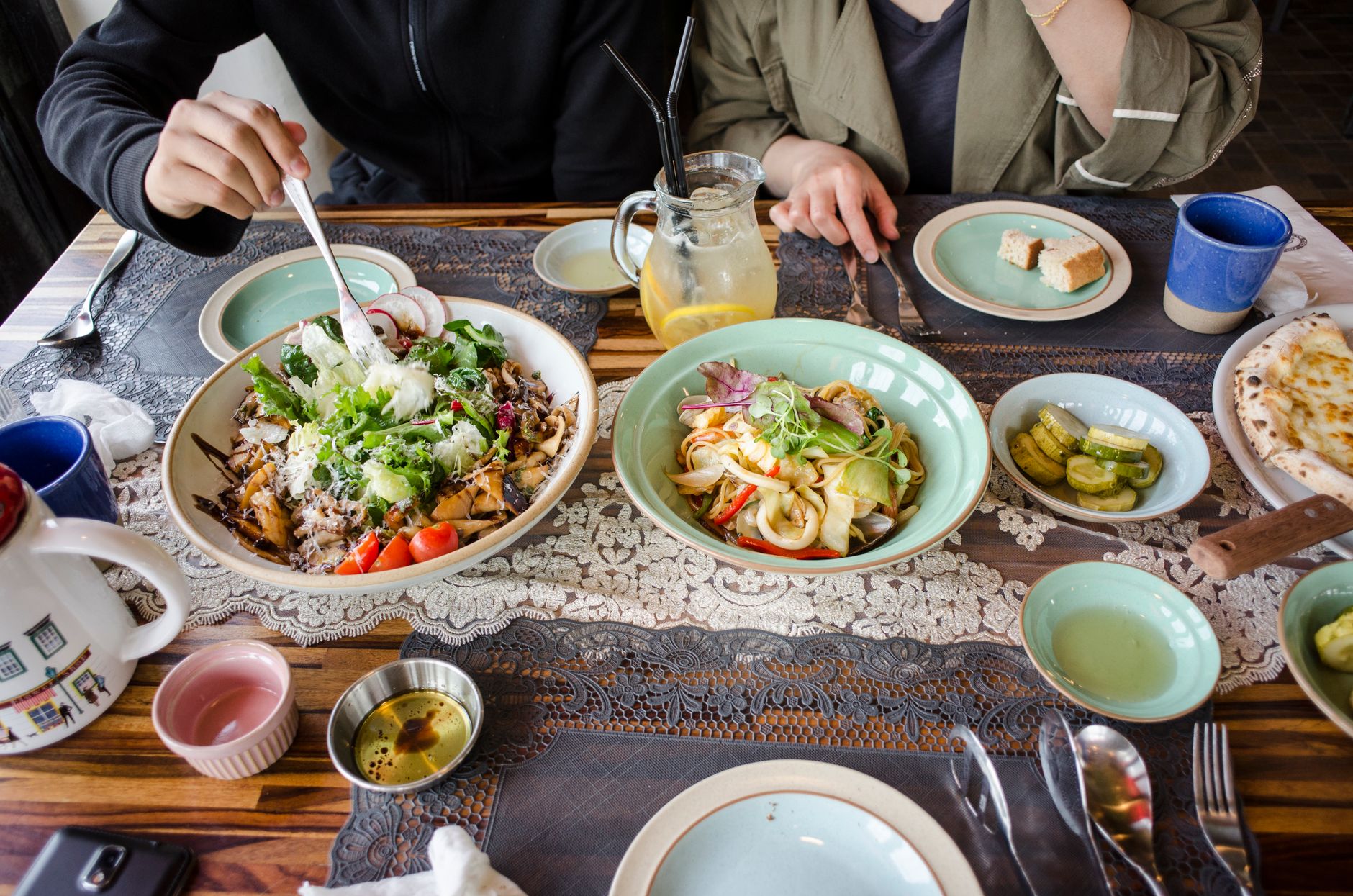 High-angle view of a vibrant meal with fresh salads, drinks, and diverse plating. (Photo: makafood / Pexels)
Frequently Asked Questions (FAQ)
Q: Which country is the best place to start culinary travel? A: For beginners, I recommend Japan and Taiwan. Flights are short, budgets are relatively forgiving, and English signage and service are common enough to keep the language barrier low. Once you've found your footing among these culinary travel destinations, expand step by step—Southeast Asia for spice, Europe for fine dining—based on your palate and budget.
Q: Is solo food travel a good idea? A: In many ways, eating alone is an advantage. Build your route around bar seats, sushi counters, and standing market stalls where solo reservations are easy, and dining alone never feels awkward. Japan, Taiwan, and Thailand have such natural solo-dining cultures that they're especially welcoming. Counter seats even become a private perk—you can chat with the chef as you eat.
Q: When and how do I book fine dining? A: Popular venues usually open reservations one to three months ahead of the date. The key is knowing each restaurant's booking-open time and setting an alarm for the day. Use dedicated reservation apps or official sites, and once confirmed, always check the cancellation policy (penalties and deadlines). If plans change, cancel in advance—avoiding a no-show is simply good manners.
Q: How much should I budget per day for food? A: Broken into tiers, a value-focused day runs about $40–60, a mid-range day $70–150, and a day including omakase or fine dining $180 and up (varies by city and exchange rate). Keeping breakfast light with a market or bakery and concentrating the budget on one dinner is the practical strategy that maximizes satisfaction.
Q: How do I tell a tourist trap from a genuine local restaurant? A: Check four things: ① the language mix of reviews (lots of native-language reviews signal a local favorite), ② the menu composition (regional home cooking vs. tourist set menus), ③ the clientele (mostly locals vs. all foreigners), and ④ the location (prime spots in the heart of a tourist zone deserve a second look). If all four point local, the odds it's the real deal are high.
Wrapping Up
We've now walked through culinary travel from A to Z. To recap the essentials: First, choose your destination by what you'll eat, not what you'll see. Second, cross-reference reviews to dodge tourist traps, and balance markets, side-street eateries, and Bib Gourmand spots. Third, manage your stomach's pacing and your budget with "choose and concentrate," and remember that with fine-dining reservations, timing is everything. Fourth, prep your language cards and learn each country's etiquette in advance.
You don't need an elaborate plan. The next time you're choosing where to go, just ask one question first: "In this city, what do I most want to eat?" From that moment, the whole texture of the trip changes. Save the map of culinary travel destinations and the checklist from this guide, and start easy—with the one city that holds the single dish you crave most.
So, where's your first food trip? The world map drawn in flavor is ready. Now it's your turn. 🍜✈️