Best Food Travel Destinations: Top 10 Foodie Getaways
Discover the best food travel destinations with our guide to 10 top foodie spots—must-try local eats, routes, budgets, and seasonal picks in one place.
Best Food Travel Destinations in South Korea: A Region-by-Region Guide to 10 Unforgettable Culinary Trips
When a long weekend or a short holiday rolls around, the first question for any food lover is always the same: where should we eat next? For travelers whose whole reason for hitting the road is the joy of a great meal, what and where you eat matters far more than the scenery. And if you're hunting for the best food travel destinations in Asia, South Korea deserves a spot right at the top of your list. Every province has its own signature dish, its own hidden food alleys, and its own seasonal specialties — which means the options are almost endless.
The catch? With so many choices, it's easy to get lost. Plenty of travelers chase down a famous spot only to come home worn out by two-hour waits and inflated tourist prices. That's exactly why a food-focused trip needs a strategy from the very first step: deciding where to go.
This guide rounds up 10 of the best food travel destinations across South Korea — from easy day trips near Seoul to seaside seafood towns, southern culinary capitals, and island escapes where nature and flavor meet. You'll also find practical notes on routes, budgets, and how to avoid rookie mistakes, so you can plug it all straight into your next trip.
How to Choose Your Destination: Taste, Season, and Route
Before you pick a place, get clear on the purpose of your trip. Want to slow down, relax, and eat well? A quiet seaside town is your friend. Craving alley-by-alley food exploration? Head for a dense, walkable city like Busan or Jeonju. Hoping to combine eating with a scenic drive? The countryside routes around Yangpyeong or Namhae fit perfectly. Once your goal is set, the shortlist narrows itself.
The second filter is season and what's in its prime. The best food travel destinations reward you most when you eat what's freshest. In spring, Tongyeong serves flounder-and-mugwort soup and sea-squirt rice bowls. Summer calls for the icy raw-fish soup (mulhoe) of Gangneung and Sokcho. Autumn brings gizzard shad and mustard-leaf kimchi along the southern coast in Yeosu and Namhae. Winter is snow crab and oyster season in Sokcho and Tongyeong. Ask yourself what will taste best at the moment you're traveling, and the right region often reveals itself.
The final filter is the route. For a day trip, the outskirts of the capital region — Yangpyeong, Gapyeong, Incheon — or any city within two hours by high-speed KTX train keeps things low-stress. For an overnighter, look to Gangneung, Sokcho, Busan, Jeonju, or Yeosu, where great food comes packaged with things to see and do. Layer these three filters — taste, season, and route — and the endless "where should we eat?" question suddenly has a clear answer.
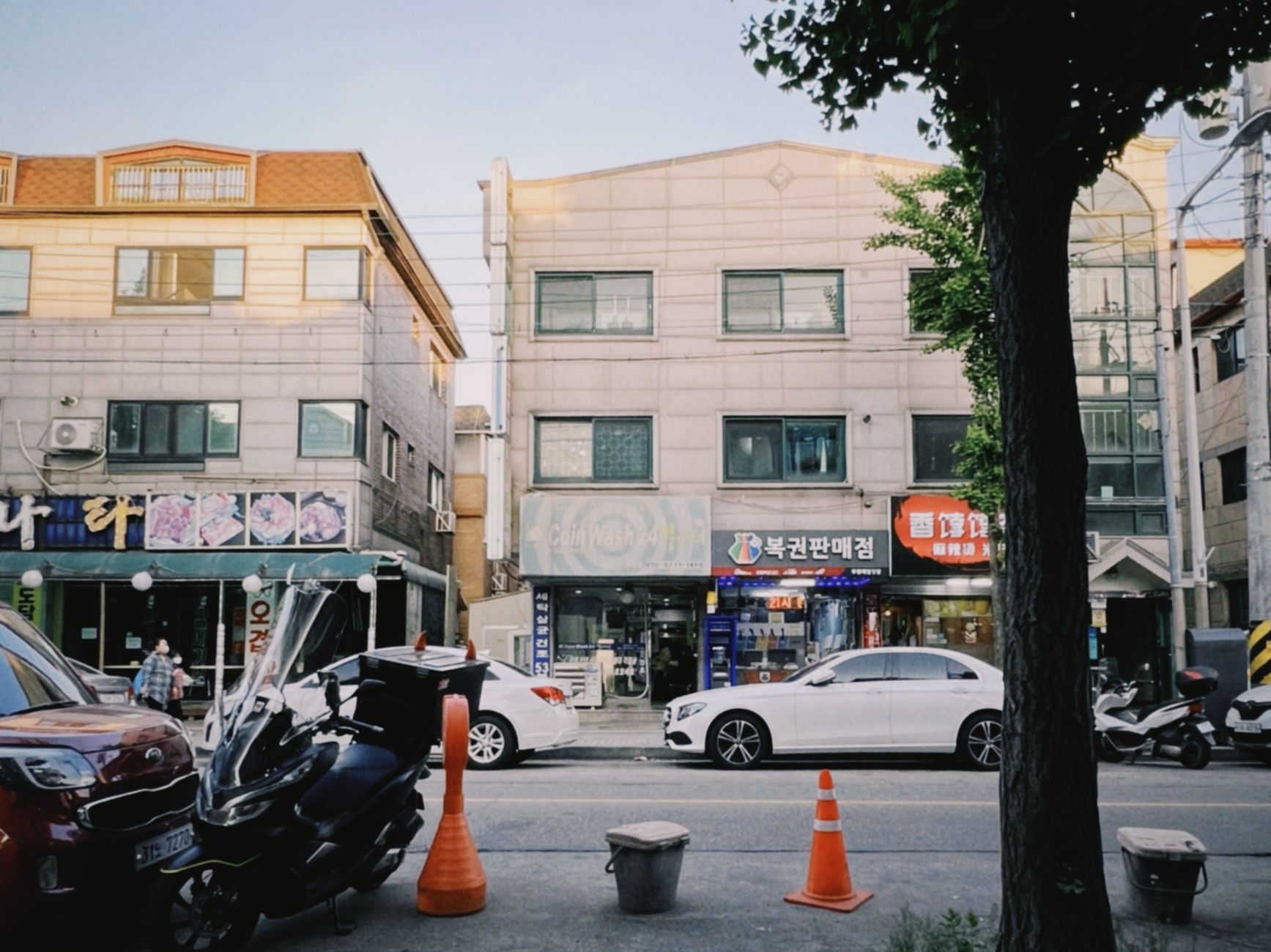 Bustling street view in Ansan-si, South Korea, featuring traffic, shops, and buildings on a sunny day. (Photo: Aibek Skakov / Pexels)
Near the Capital: Seoul, Gyeonggi, and Incheon
If time is tight, the most realistic food trip is the one closest to home. You don't need to travel far to capture that culinary-getaway feeling — a single day is plenty.
Seoul itself is packed with local food alleys that never go out of style. Euljiro is famous for its retro drinking lanes and old-school baekban (home-style set meals) and cold-noodle shops. Seongsu draws crowds with inventive brunch spots and dessert cafés, while Mangwon layers traditional-market street food with tiny neighborhood restaurants. It's ideal for building a walkable "alley crawl" that hits several places on foot.
Gyeonggi Province blends nature with good eating. Yangpyeong and Gapyeong are known for riverside cafés with a view and hearty countryside dishes like lacquer-tree chicken soup and spicy fish stew. Wrap them into a scenic drive and even a half-day outing feels satisfying.
Incheon is the go-to for a same-day seafood run. The classic route starts in Chinatown with black-bean noodles and puffed sugar bread, then heads to Soraepogu fish market for seasonal sashimi and shrimp. It's reachable by subway straight from Seoul, so you can pull it off without a car.
By the Sea: Gangneung, Sokcho, Tongyeong, and Yeosu
Eating with a sea view is the crown jewel of any food trip, and these four coastal cities — two on the East Sea, two on the South — are among the best food travel destinations for seafood lovers.
Gangneung is famous for soft chodang tofu and mulhoe. The signature route is breakfast in the Chodang tofu village, then a coffee to finish at the Anmok Beach café street. Sokcho is beloved for its sweet-and-spicy fried chicken at the central market and, in winter, snow crab and red crab — perfect for a market-hopping food tour.
Head down the southern coast and you'll reach Tongyeong, so rich in variety — oysters, sea-squirt rice bowls, chungmu rolls, honey bread — that locals nickname it the "gourmet city." Yeosu is known for mustard-leaf kimchi, soy-marinated crab set meals, and seasoned tonguefish, best enjoyed alongside the city's famous nighttime harbor lights.
A word of caution at fish markets and seafood halls: know how to sidestep the tourist markup. Choose stalls with clearly posted prices, and confirm the price per kilogram plus any prep and table-setting fees up front. Rather than haggling on the spot, it's safer to walk a few shops, compare the going rates, and then decide.
Southern Culinary Capitals: Busan, Jeonju, and Daegu
If you're thinking city-by-city, the "big three" food cities of the south are impossible to skip.
Busan is a giant food map all on its own. You can build a full day around pork-and-rice soup (dwaeji gukbap) for breakfast, wheat noodles (milmyeon) for lunch, and fresh sashimi in Haeundae or Gijang for dinner. Add the street-food lanes of Gukje and Bupyeong markets, and you could stay for days without running out of things to eat.
Jeonju is a textbook food-travel town. Centered on the traditional hanok village, it's celebrated for its bibimbap, bean-sprout soup, and makgeolli alleys where cheap rice wine comes with an endless parade of free side dishes. The eats are clustered within an easy walking route, making it just as rewarding solo as it is with friends or a partner.
Daegu revolves around the night market at Seomun Market. Local specialties like flat dumplings, grilled pork intestines, and cold seasoned fish make it a paradise for serious eaters. Time your visit for the evening, when the night market opens and the atmosphere is half the fun.
Islands and Nature: Jeju and Namhae
Want to escape the crowds and eat well surrounded by nature? Island travel is the answer.
Jeju is loaded with dishes built on ingredients you won't find anywhere else — grilled black pork, meat noodle soup, sea-urchin seaweed soup, and braised hairtail. The sea-urchin soup and abalone porridge served at a haenyeo (diver's) hut are a one-of-a-kind experience unique to the island. Restaurants are scattered along the east and west coasts, so a rental car is essentially a must.
Namhae is best known for anchovy ssambap and view restaurants near the German Village. Add a meal to a drive linking the terraced Darangyi village with the German Village and you've got a proper healing trip. Public transit here is sparse, so renting a car is strongly recommended.
In island and rural areas, the most popular spots often run on reservations or sell out early once their fresh ingredients are gone. Check opening hours and reservation policies before you go, and in peak season, book your rental car well in advance to be safe.
The No-Regrets Food Trip Checklist
Even the best food travel destinations can disappoint if you show up unprepared — long lines and blown budgets ruin more trips than bad restaurants do. Nail these three things and your odds of a smooth trip go way up.
First, manage the wait with apps and reservations. For hot spots, use a remote line-up app to grab a spot in the queue ahead of time, or book directly where reservations are accepted. If a dawn arrival isn't your style, aim for off-peak windows — skip the lunch rush (around noon) and the dinner rush (roughly 6 to 8 p.m.).
Second, plan your budget in advance. Food is going to be the main expense on a trip like this, so treat it that way. Per-meal costs climb fast on a culinary tour, so look up how many meals you'll eat each day and roughly what the signature dishes cost — that quick homework keeps overspending in check.
Third, filter your search for genuine local gems. The trick is telling real reviews from paid promotion. Skip posts with suspiciously polished photos and repetitive, copy-paste phrasing. Cross-check return-visit reviews, comments from locals, and actual visitor ratings on map apps, and you'll dodge most of the duds.
 Charming street view of a traditional Korean restaurant facade in Seoul. (Photo: Huy Phan / Pexels)
Frequently Asked Questions
Q: What budget should I plan for a two-day, one-night food trip? For two people, the total of food, lodging, and transportation varies widely depending on the region and the class of accommodation. Cities like Gangneung, Busan, and Jeonju are comfortable in the rough range of $180–$300, while regions that require a rental car — Jeju or Tongyeong — need a little more breathing room for the car. To save, choose mid-range lodging near the food alleys and focus two meals a day on "must-try" restaurants, filling the rest with market street food.
Q: Which food destinations are best for solo travelers? Look for cities where eating alone and waiting solo feel natural. Jeonju makes single-portion orders like bean-sprout soup and bibimbap effortless, and Busan's pork soup and wheat noodles are classic solo meals. Gangneung, with its tofu and mulhoe, is also easy to enjoy on your own — making it one of the friendlier best food travel destinations for going it alone.
Q: Where can I take a food trip without a car, using public transit? Cities with strong KTX and intercity bus access have the edge. Jeonju is easy by both train and bus, with its hanok-village food alleys all within walking distance. Busan's dense subway network lets you cover pork soup, wheat noodles, and market routes entirely on public transit, and Gangneung is reachable by KTX, after which local buses and taxis handle the rest.
Q: Are there specific destinations recommended by season? Match the season to its ingredient. Spring means Tongyeong for flounder-mugwort soup and sea-squirt rice bowls; summer calls for chilled mulhoe in Gangneung and Sokcho; autumn brings gizzard shad and mustard-leaf kimchi in Yeosu and Namhae; and winter is snow crab and oyster season in Sokcho and Tongyeong. Choosing your region around what's in its prime raises the payoff dramatically.
Final Thoughts
Deciding where to go on a food trip really does come down to three things: taste, season, and route. Whether you want a light day trip near the capital, a seaside city loaded with fresh seasonal seafood, an alley crawl through Busan, Jeonju, or Daegu, or a nature-soaked escape to Jeju or Namhae — once your purpose is clear, the choice gets easy.
Add smart line management, a realistic budget, and a sharp eye for genuine local reviews, and you've got the recipe for a food trip with no regrets. This weekend, pick one of the 10 best food travel destinations above and start mapping your own culinary route. Even just opening a map app and searching for one seasonal dish is enough to get the ball rolling. Here's to great memories — and an even greater meal — waiting at your next stop.